
Es mostren els missatges amb l'etiqueta de comentaris ANC. Mostrar tots els missatges
Es mostren els missatges amb l'etiqueta de comentaris ANC. Mostrar tots els missatges
1/27/2017
MANUAL
MANUAL PER GUANYAR EL REFERÈNDUM
1. Continueu sense dir mentides
2. Continueu explicant les mentides de l'adversari
3. Continueu sense menysprear l'adversari
4. Continueu sense caure en provocacions
5. Continueu raonant sense pretendre convèncer


6/13/2016
Consulta als socis de l'ANC
Heus aquí el text del correu enviat a tots els associats de ple dret el dia 11 de juny de 2016. A sota us faig una invitació:
Benvolgut/da,
El Secretariat de l’ANC ha acordat consultar als associats sobre la convocatòria d’un Referèndum d’independència.
Aquesta consulta es portarà a terme abans del diumenge 3 de juliol i hi són convocats tots els membres de ple dret de l’ANC. La votació es podrà realitzar tant presencialment com electrònicament.
La pregunta acordada és:
Vols que l'ANC exigeixi a les institucions catalanes que convoquin el poble de Catalunya a un Referèndum per DECIDIR sobre la Independència?
La darrera setmana ha suposat un punt d'inflexió en el procés d'independència. Aquest passat dimecres els partits polítics no han estat capaços de mantenir la unitat que sempre els hem reclamat, de manera que l'acord de governabilitat pactat al gener de 2016 queda en entredit.
Per l’ANC, el full de ruta que va sortir de les eleccions del 27 de setembre ha quedat manifestament erosionat. Per això, proposem avançar cap a la convocatòria d'un referèndum d'independència, la via més democràtica, legítima i efectiva per arribar a la proclamació de la República Catalana, recuperant la iniciativa política de la majoria independentista i finalitzant el procés.
Si la resposta a la consulta és positiva, l’ANC proposarà i exigirà al Govern i al Parlament, la celebració d’un referèndum amb resposta binària sobre una pregunta clara en relació a la independència de Catalunya. El poble de Catalunya haurà de decidir, sobiranament, el seu futur polític. D’acord amb aquest plantejament, el resultat del referèndum ha d’implicar, en cas de victòria del Si, la declaració immediata d’independència.
Ha arribat el moment de tornar el lideratge del procés a la societat. Hem de ser novament les entitats socials sobiranistes, les que exigim als partits polítics les actuacions necessàries per superar les seves diferències i culminar el procés sobiranista.
Durant els propers dies et comunicarem tots els detalls de la futura consulta.
Endavant República Catalana!
Secretariat Nacional
Badalona, 11 de juny del 2016
Amigues i amics,
Us convido a fer-me comentaris indicant clarament (i sintètica!) avantatges o inconvenients de votar "Sí" o "No" a la consulta.
5/21/2016
ANC_PROMESA
Pregunta als candidats al Secretariat Nacional de l'ANC, feta el 9 de maig.
"Si surts elegit, estàs disposat a prometre, a la reunió constitutiva del nou SN, no defensar-hi els interessos de cap partit o organització externa, sinó actuar només per a consecució de l'objectiu de l'ANC, i a informar el SN de qualsevol eventual intent des de fora d'influir en la teva activitat a l'ANC?"
Respostes: https://assemblea.cat/?q=node/10881
12/24/2015
Jordi Sanchez, a ANC Sarrià - Sant Gervasi
àudio:
https://soundcloud.com/secretaria-anc-ssg/jordisanzhezQuan vaig saber que Jordi Sànchez i Picanyol era el nostre nou president, vaig fer un salt d'alegria. El conec de fa més de trenta anys, i al llarg de la seva trajectòria veiem com ha guanyat experiència i prestigi en quatre camps diferents (i potser me'n deixo algun!).
Són els camps de l'activisme polític, de l'activitat acadèmica, del món de la recerca social, i de l'activitat dins de i des de les administracions. Il·lustraré cada faceta molt breument.
El vaig conèixer primer en relació amb la Crida a la Solidaritat en Defensa de la Llengua, la Cultura i la Nació Catalanes, primer com a braç dret (molt jove!) d'Àngel Colom i després com al seu successor. Les multitudinàries manifestacions de catalanisme que la Crida va muntar els anys 80, organitzades al marge dels partits, van marcar una generació llavors, i podem dir que l'Assemblea ha renovat aquella flama al cap de trenta anys.
Una segona faceta seva és la de professor universitari, concretament en el camp de la ciència política. Fruit d'aquesta activitat tenim un excel·lent manual seu, La democràcia electrònica, on repassa la utilització d'Internet per a l'activitat política. El llibre és publicat per la UOC (qui si no?!).
En tercer lloc té una brillant trajectòria en el camp del foment de la recerca i la reflexió socials, al llarg de gairebé 15 anys, com a director adjunt i després director, de la Fundació Jaume Bofill, el prestigi de la qual és inqüestionable, per exemple, en el terreny de les desigualtats i la justícia socials, en l'estudi dels èxits i reptes del sistema educatiu,
No sé fins a quin punt la direcció del Jordi va marcar la línia de la Fundació, i fins a quin punt la direcció de la Fundació va marcar en Jordi, el cert és que, en quart lloc, el trobem molt a prop de les polítiques socials sobre el terreny. Per un costat les ajuda a definir: com a un dels forjadors del Pacte Nacional per l'Educació i després, del Pacte nacional per a la immigració. Per altra banda en tasques de direcció de la televisió pública: ser conseller de la Corporació Catalana de Ràdio i Televisió -a proposta, si no m'erro, d'Iniciativa per Catalunya-Verds, durant dues legislatures. I el seu acostament més valuós amb les problemàtiques socials i les respostes de l'administració ha estat segurament gràcies a la seva recent etapa de cinc anys com a adjunt general del síndic de greuges de Catalunya, al costat del síndic, Rafael Ribó.
Vull acabar amb tres consideracions. Primera, que el seu compromís amb el país i la seva independència, com heu pogut veure, vénen de l'adolescència, si no abans! Segon, la seva trajectòria inclou l'assumpció de diferents relleus, promocions professionals internes que diuen molt de l'èxit amb què ha afrontat cada nou repte. I finalment, tinc molt indicis per sospitar que es troba tant a gust parlant davant d'un públic (tot i que té encara més experiència fent conferències que fent mítings!), és una persona a qui li agrada moure's amb discreció, entre bambolines. Li agrada negociar a l'entorn de la taula, contribuint incansablement a forjar aliances i consensos, sobretot de caire polític: el darrer ha estat l'acord més ampli possible entre els principals partits sobiranistes per crear una plataforma electoral de cara al 27 de setembre: la victoriosa Junts pel Sí.
Per tot això, entendreu perquè vaig acceptar immediatament la invitació que se'm va fer per fer aquest parlament avui!
Amb tots nosaltres -i sense més preàmbuls (com se sol dir!)- per parlar de com l'Assemblea Nacional Catalana veu els escenaris que es plantegen en aquesta etapa (i segurament, d'altres coses també!), el nostre president, Jordi Sànchez.

Sarrià, 21 de desembre de 2015
Són els camps de l'activisme polític, de l'activitat acadèmica, del món de la recerca social, i de l'activitat dins de i des de les administracions. Il·lustraré cada faceta molt breument.
El vaig conèixer primer en relació amb la Crida a la Solidaritat en Defensa de la Llengua, la Cultura i la Nació Catalanes, primer com a braç dret (molt jove!) d'Àngel Colom i després com al seu successor. Les multitudinàries manifestacions de catalanisme que la Crida va muntar els anys 80, organitzades al marge dels partits, van marcar una generació llavors, i podem dir que l'Assemblea ha renovat aquella flama al cap de trenta anys.
Una segona faceta seva és la de professor universitari, concretament en el camp de la ciència política. Fruit d'aquesta activitat tenim un excel·lent manual seu, La democràcia electrònica, on repassa la utilització d'Internet per a l'activitat política. El llibre és publicat per la UOC (qui si no?!).
En tercer lloc té una brillant trajectòria en el camp del foment de la recerca i la reflexió socials, al llarg de gairebé 15 anys, com a director adjunt i després director, de la Fundació Jaume Bofill, el prestigi de la qual és inqüestionable, per exemple, en el terreny de les desigualtats i la justícia socials, en l'estudi dels èxits i reptes del sistema educatiu,
No sé fins a quin punt la direcció del Jordi va marcar la línia de la Fundació, i fins a quin punt la direcció de la Fundació va marcar en Jordi, el cert és que, en quart lloc, el trobem molt a prop de les polítiques socials sobre el terreny. Per un costat les ajuda a definir: com a un dels forjadors del Pacte Nacional per l'Educació i després, del Pacte nacional per a la immigració. Per altra banda en tasques de direcció de la televisió pública: ser conseller de la Corporació Catalana de Ràdio i Televisió -a proposta, si no m'erro, d'Iniciativa per Catalunya-Verds, durant dues legislatures. I el seu acostament més valuós amb les problemàtiques socials i les respostes de l'administració ha estat segurament gràcies a la seva recent etapa de cinc anys com a adjunt general del síndic de greuges de Catalunya, al costat del síndic, Rafael Ribó.
Vull acabar amb tres consideracions. Primera, que el seu compromís amb el país i la seva independència, com heu pogut veure, vénen de l'adolescència, si no abans! Segon, la seva trajectòria inclou l'assumpció de diferents relleus, promocions professionals internes que diuen molt de l'èxit amb què ha afrontat cada nou repte. I finalment, tinc molt indicis per sospitar que es troba tant a gust parlant davant d'un públic (tot i que té encara més experiència fent conferències que fent mítings!), és una persona a qui li agrada moure's amb discreció, entre bambolines. Li agrada negociar a l'entorn de la taula, contribuint incansablement a forjar aliances i consensos, sobretot de caire polític: el darrer ha estat l'acord més ampli possible entre els principals partits sobiranistes per crear una plataforma electoral de cara al 27 de setembre: la victoriosa Junts pel Sí.
Per tot això, entendreu perquè vaig acceptar immediatament la invitació que se'm va fer per fer aquest parlament avui!
Amb tots nosaltres -i sense més preàmbuls (com se sol dir!)- per parlar de com l'Assemblea Nacional Catalana veu els escenaris que es plantegen en aquesta etapa (i segurament, d'altres coses també!), el nostre president, Jordi Sànchez.

Sarrià, 21 de desembre de 2015
8/13/2015
material ANC

Tríptic amb una explicació detallada de com funcionarà la Via Lliure, el dia 11 de setembre a l'avinguda Meridiana de Barcelona, a partir de les 3 de la tarda. Adreces web per inscripcions i més informació.
http://assemblea.cat/sites/default/files/material/Tr%C3%ADptic_Via_Lliure_OK_0.jpg (davant del tríptic)
http://assemblea.cat/sites/default/files/material/Tr%C3%ADptic_Via_Lliure_interior_OK.jpg (darrera del tríptic)
7 RESPUESTAS SOBRE LA INDEPENDENCIA
http://assemblea.cat/sites/default/files/material/Diptico7RespuestasSobreLaIndependencia-CAST.pdf
- 1. ¿PARA QUÉ UNA CATALUÑA INDEPENDIENTE?
- 2. ¿SEGUIREMOS EN LA UNIÓN EUROPEA?
- 3. ¿SEGUIRÉ COBRANDO LA PENSIÓN O LA PRESTACIÓN POR DESEMPLEO?
- 4. ¿SERÁ LA REPÚBLICA CATALANA ECONÒMICAMENTE VIABLE?
- 5. ¿PODRÉ SEGUIR SIENDO ESPAÑOL?
- 6. ¿ LOS POLÍTICOS ACTUARÁN COMO HASTA AHORA?
- 7. ¿POR QUÉ NECESITAMOS UN NUEVO ESTADO?
http://assemblea.cat/sites/default/files/material/Diptic7RespostesSobreLaIndepend_ncia-CAT.pdf
"La República Catalana continuarà sent Europa" (díptic)
- 1. CATALUNYA INDEPENDENT, PER A QUÈ?
- 2. SEGUIREM A LA UNIÓ EUROPEA?
- 3. SEGUIRÉ COBRANT LA PENSIÓ O L’ATUR?
- 4. SERÀ ECONÒMICAMENT VIABLE?
- 5. PODRÉ SEGUIR ESSENT ESPANYOL?
- 6. ELS POLÍTICS FARAN COM FINS ARA?
- 7. PER QUÈ ENS CAL UN ESTAT?
"A la Catalunya independent seguiré cobrant la pensió o els subsidis" (díptic)
http://assemblea.cat/sites/default/files/material/Pensions.pdf
http://assemblea.cat/sites/default/files/material/Pensions.pdf
"Catalunya independent serà econòmicament viable" (díptic)
2/24/2015
Preguntes del Senador J. L. CLERIES al Gobierno
Preguntes del Senador J. L. CLERIES al Gobierno (octubre de 2014)
1
D.
JOSEP LLUÍS CLERIES I GONZÀLEZ Senador designado por el Parlamento
de Cataluña, del GRUPO PARLAMENTARIO CATALÁN EN EL SENADO
CONVERGÈNCIA I UNIÓ, al amparo de lo previsto en los artículos 160
y 169 del Reglamento de la Cámara, presenta la siguiente pregunta
con respuesta escrita:
Pregunta:
684/060797
-¿Qué
medidas ha tomado el Gobierno ante los intentos de bloqueo de las
comunicaciones personales de los responsables de la campaña "Ara
és l'hora", organizadores de la V de la Diada Nacional de
Catalunya?
Resposta
(684/60797
a 684/60800 / 140707 a 140710):
En
contestación a las preguntas formuladas por Su Señoría se informa
que no se tiene constancia por parte de las Fuerzas y Cuerpos de
Seguridad del Estado de los hechos expuestos en el texto de sus
preguntas, no habiéndose tramitado por tanto ninguna denuncia por
los mismos. Por otra parte, ninguna autoridad judicial ha solicitado
la práctica de diligencias policiales tendentes a su
esclarecimiento.
...ooo000&&&000ooo...
2
D.
JOSEP LLUÍS CLERIES I GONZÀLEZ Senador designado por el Parlamento
de Cataluña, del GRUPO PARLAMENTARIO CATALÁN EN EL SENADO
CONVERGÈNCIA I UNIÓ, al amparo de lo previsto en los artículos 160
y 169 del Reglamento de la Cámara, presenta la siguiente pregunta
con respuesta escrita:
Pregunta:
684/060798
¿Qué
medidas ha tomado el Gobierno para investigar el robo de datos de los
socios de la ANC de Tarragona?
Resposta
(684/60797
a 684/60800 / 140707 a 140710):
En
contestación a las preguntas formuladas por Su Señoría se informa
que no se tiene constancia por parte de las Fuerzas y Cuerpos de
Seguridad del Estado de los hechos expuestos en el texto de sus
preguntas, no habiéndose tramitado por tanto ninguna denuncia por
los mismos. Por otra parte, ninguna autoridad judicial ha solicitado
la práctica de diligencias policiales tendentes a su
esclarecimiento.
"No
se tiene constancia..."
però:
-
Un cable desconnectat a Tarraco Arena: la història real del robatori de dades de l’ANC. 4/9/2014. http://www.vilaweb.cat/noticia/4209422/20140904/cable-desconnectat-tarraco-arena-historia-real-robatori-dades-lanc.html
-
Una página de Facebook difunde supuestos datos de socios de la ANC. El grupo llamado 'Anonymous Catalunya', que proclama la lucha contra el "secesionismo catalán", avisa que tiene más información. 4/9/2014. http://www.elperiodico.com/es/noticias/politica/una-pagina-facebook-difunde-supuestos-datos-socios-anc-3494493
-
Filtran la lista de los asociados a la ANC. 4/9/2014. http://www.cronicaglobal.com/es/notices/2014/09/filtran-los-datos-de-los-asociados-a-la-anc-10790.php
-
ANC sospecha que la filtración de datos de sus socios puede ser obra de CNI. 4/9/2014. http://www.catalunyapress.cat/es/notices/2014/09/anc-denuncia-que-la-filtracion-de-datos-puede-ser-obra-de-cni-105736.php
-
La ANC denuncia el pirateo informático de parte del censo de sus socios. 5/9/2014. http://www.20minutos.es/noticia/2230053/0/anc-denuncia/piroteo-informatico/parte-censo-socios/
...ooo000&&&000ooo...
3
D.
JOSEP LLUÍS CLERIES I GONZÀLEZ Senador designado por el Parlamento
de Cataluña, del GRUPO PARLAMENTARIO CATALÁN EN EL SENADO
CONVERGÈNCIA I UNIÓ, al amparo de lo previsto en los artículos 160
y 169 del Reglamento de la Cámara, presenta la siguiente pregunta
con respuesta escrita:
Pregunta:
684/060799
-¿Qué
medidas ha tomado el Gobierno para investigar el origen del ataque
masivo de la centralita telefónica que inutilizó centenares de
teléfonos durante 48h de la Assemblea Nacional Catalana i Òmnium
Cultural "Ara és l'hora", organizadores de la V de la
Diada, que tenían el objetivo de impedir la campaña para la
organización de la manifestación de la Diada del "Onze de
Setembre"?
Resposta
(684/60797
a 684/60800 / 140707 a 140710):
En
contestación a las preguntas formuladas por Su Señoría se informa
que no se tiene constancia por parte de las Fuerzas y Cuerpos de
Seguridad del Estado de los hechos expuestos en el texto de sus
preguntas, no habiéndose tramitado por tanto ninguna denuncia por
los mismos. Por otra parte, ninguna autoridad judicial ha solicitado
la práctica de diligencias policiales tendentes a su
esclarecimiento.
...ooo000&&&000ooo...
4
D.
JOSEP LLUÍS CLERIES I GONZÀLEZ Senador designado por el Parlamento
de Cataluña, del GRUPO PARLAMENTARIO CATALÁN EN EL SENADO
CONVERGÈNCIA I UNIÓ, al amparo de lo previsto en los artículos 160
y 169 del Reglamento de la Cámara, presenta la siguiente pregunta
con respuesta escrita:
Pregunta:
684/060800
¿Qué
medidas ha tomado el Gobierno para investigar el origen de los
ataques cibernéticos en la web de la Assemblea Nacional Catalana i
Òmnium Cultural "Ara és l'hora", organizadores de la V de
la Diada, que tenían el objetivo de impedir la campaña para la
organización de la manifestación de la Diada del "Onze de
Setembre" y hacer caer los servidores?
Resposta
(684/60797
a 684/60800 / 140707 a 140710):
En
contestación a las preguntas formuladas por Su Señoría se informa
que no se tiene constancia por parte de las Fuerzas y Cuerpos de
Seguridad del Estado de los hechos expuestos en el texto de sus
preguntas, no habiéndose tramitado por tanto ninguna denuncia por
los mismos. Por otra parte, ninguna autoridad judicial ha solicitado
la práctica de diligencias policiales tendentes a su
esclarecimiento.
...ooo000&&&000ooo...
5
D.
JOSEP LLUÍS CLERIES I GONZÀLEZ Senador designado por el Parlamento
de Cataluña, del GRUPO PARLAMENTARIO CATALÁN EN EL SENADO
CONVERGÈNCIA I UNIÓ, al amparo de lo previsto en los artículos 160
y 169 del Reglamento de la Cámara, presenta la siguiente pregunta
con respuesta escrita:
Pregunta:
684/060801
¿Existe
actualmente alguna normativa española que impida que un ciudadano
español dejara de recibir su pensión de jubilación en caso de
residir hipotéticamente en una parte de España que se independizara
del Estado español?
Resposta
(684/60796
y 684/60801 /
140706
y 140711):
En
el actual Ordenamiento Jurídico de la Seguridad Social no existe
ninguna norma que regule las consecuencias jurídicas y por tanto
garantice la percepción de las prestaciones de la Seguridad Social
en el escenario planteado por Su Señoría en sus preguntas.
Por
lo que se refiere al cambio de país de residencia y el derecho al
percibo de la pensión de jubilación de la Seguridad Social
española, en última instancia, el régimen jurídico de la
prestación exportada vendría determinado por la aplicación de la
normativa internacional que pudiera resultar de aplicación.
...ooo000&&&000ooo...
6
D.
JOSEP LLUÍS CLERIES I GONZÀLEZ Senador designado por el Parlamento
de Cataluña, del GRUPO PARLAMENTARIO CATALÁN EN EL SENADO
CONVERGÈNCIA I UNIÓ, al amparo de lo previsto en los artículos 160
y 169 del Reglamento de la Cámara, presenta la siguiente pregunta
con respuesta escrita:
Pregunta
684/60796
¿Continuaría
percibiendo su pensión de jubilación un ciudadano español, de
origen comunitario, si decidiese volver a residir en su país de
origen, temporal o definitivamente, o vivir en otro país del mundo,
o desease incluso recuperar su ciudadanía
de origen?
Resposta (684/60796 y 684/60801 / 140706 y 140711):
Resposta (684/60796 y 684/60801 / 140706 y 140711):
En
el actual Ordenamiento Jurídico de la Seguridad Social no existe
ninguna norma que regule las consecuencias jurídicas y por tanto
garantice la percepción de las prestaciones de la Seguridad Social
en el escenario planteado por Su Señoría en sus preguntas.
Por
lo que se refiere al cambio de país de residencia y el derecho al
percibo de la pensión de jubilación de la Seguridad Social
española, en última instancia, el régimen jurídico de la
prestación exportada vendría determinado por la aplicación de la
normativa internacional que pudiera resultar de aplicación.
1/12/2015
Una caricatura grotesca
Aquests dies llegim molt a les xarxes social sobre les possibles enteses polítiques aconsellables o necessàries (segons el gust de cadascú) perquè en el proper Parlament de Catalunya, sorgit de les eleccions que tots creiem que seran abans de les municipals, hi hagi una majoria incontestable favorable a la independència de Catalunya.
Clica a sota, a "Més informació", per llegir la resta del post.
12/21/2014
Missatge del Secretariat Nacional de l'ANC

Benvolgut/da MIQUEL STRUBELL,
Clica a sota, a "Més informació", per llegir la resta de l'escrit.
9/23/2014
The Right To Decide
"Civic Engagement on the Road to Self-government"
Contribution of Miquel Strubell to Conference on "The Right to Decide in the 21st Century: Scotland, Catalonia and Beyond". 25 September 2014. Conference organised by the Unrepresented Nations and Peoples Organization, the European Free Alliance and the Centre Maurits Coppieters. ...
I am most grateful for this invitation, and for the opportunity to explain to this assembly what for me is a unique, unparalleled process to the road towards national independence. I am pleased to convey to you the best wishes of the president of the grassroots organisation I am representing here today, senyora Carme Forcadell. We are really pleased to be able to speak here, not least because of the bizarre things that have been said about us and the process as a whole.
Our process is unique on a number of scores:
The Parliament of Catalonia has on several occasions voted Resolutions (such as R 98/III, on December 12 1989) stating that "Catalonia does not relinquish the right to its self-determination". Again, on October 1 1998, a similar Resolution was adopted.
"Catalunya és una nació", Article 1 of the Draft Statute of Autonomy, adopted on September 2005, reminded us. The Preamble was just as clear: "This Statute is moved by the aspiration, the project and the dream of a Catalonia without any kind of obstacle to the free and full interdependence that a nation needs today ("... mouen aquest Estatut l'aspiració, el projecte i el somni d'una Catalunya sense cap mena d'entrebancs a la lliure i plena interdependència que una nació necessita avui").

 However, the Spanish Parliament chopped these texts out of the Statute that it adopted in 2006 and put to the Catalan people.
The "Right to Decide" first appeared on the scene at the end of 2005. The Plataforma pel Dret de Decidir consists of hundreds of organisations supporting the right of self-determination. Shortly after being established, it brought out into the street, beyond its wildest dreams (with hardly any support from institutions or parties), as many as a million Catalans on February 18 2006, to state clearly "We are a Nation, We Have The Right To Decide". It was a call for the September 30 2005 Draft Statute of Autonomy (which received the support of 89% of the Chamber) not to be maimed by the Spanish Parliament. Its call went unheeded, and first the Congress (in 2006) and then the Constitutional Court (in June 2010) in response to an appeal by the People's Party, severely reduced the planned increase in Catalonia's level of self-government.
On July 10 2010 a huge demonstration, which had been planned months ahead (given that news leaked from the Constitutional Court made it clear that their judgment would be a serious cutback in the text of the Statute, which had already been sanctioned by the Catalan people in a referendum) filled the centre of Barcelona. It was organised by a cultural organisation, Omnium Cultural, though with the backing of the three-party Government coalition, which headed the demonstration. Over a million people took part in this march, which simply could not move forward for several hours. It was the last "protest" demonstration, and the following three demonstrations were completely differtent: enthusiastic, looking forward with hope, and positive in outlook.
The Pacte Nacional pel Dret de Decidir, the National Pact for the Right to Decide, consists of hundreds of civil, civic, citizen, cultural, economic, trade union, business organisations; local councils; the parliamentary groups that have given support to the right to decide, and the Government. It first met on June 13 2013. Its manifesto has been signed by over 800 organisations.
The most important grassroots initiative, however, linked up with the "Popular Referenda", following the lead of Arenys de Munt, a medium-sized town about 30 km from Barcelona. These unofficial referenda were held over 500 towns across the country (between September 2009 and April 2011), and about a million people (not a few, in tears) expressed their vote for (in most cases) or against Catalonia's independence. It was during this period that the "Assemblea Nacional Catalana" was devised. When after months of gradually widening an initially very small circle of people invited to join the project, the "Assemblea" was launched on April 30 2011, at the "Conferència Nacional per l'Estat Propi", with a view to holding its first general assembly the following year, and with its sights aimed at a "binding referendum that could be held in 2014". ("amb la mirada fixada en un referèndum vinculant que podria celebrar-se el 2014").
The Assemblea, whose single aim is to achieve the independence of Catalonia, has built up a network of 600 local assemblies (largely in places that had already held popular referenda), which work closely together thanks to the social networks. It has over 70 sectoral assemblies as well, working to persuade collectives close to themn of the advantages of independence. We now have over 70,000 paid-up members and volunteers.
The huge pro-independence demonstration organised by the Assemblea on September 11 2012, just a few months after its formal establishment at the first General Assembly, had immediate political consequences.
The consequences were an early election, sprung by our First Minister, Artur Mas, who included his coalition's election manifesto a commitment to hold a referendum on independence, if at all possible with the consent of the Spanish govenrment. He was returned to power, with a smaller majority, but quickly reached an agrement with the second most voted party, Esquerra Republicana de Catalunya, whose party commitment is to work towards independence. Several other parliamentary parties support the vote to be held on November 9 2014, a vote announced (with the question) in December 2013, to the surprise of the Spanish government.
However, the 2012 demonstration was surpassed by the meticulously organised "Catalan Way", a 400 km-long human chain of over a million people, from one end of Catalonia to the other (with incidents at the Valencian end, because the Spanish civil guard turned a blind eye to a last-minute court ruling). It was held on September 11 2013. Most people were dressed in yellow teashirts, specially made by the Assemblea for the occasion. They signed up on an interactive map, which made sure there was not a single break in the chain, even in the relatively sparsely inhabited Ebro delta district. The chain proved possible thanks to 1500 coaches, hundreds of thousands of cars, trains and in Barcelona, on the underground... In Barcelona, as was to be expected, the chain was overwhelmed by an uncountable number of people. The coverage by the international press was excellent, and the Wall Street Journal's top photo of the year was by Raymond Roig.

On the political front, the Catalan Parliament voted a "Declaration of Sovereignty and the right to Decide of the People of Catalonia" ("Declaració de sobirania i el dret a decidir del poble de Catalunya", 23 January 2013) which was duly judged unconstitutuional (because the Spanish people and "nation" are indivisible) by the Constitutiional Court which, nevertheless, said it was perfectly legitimate for the authorities to ask the Catalan people's opinion on the issue. That is precisely what we are going to do on November 9th, though the Spanish government is adamant that even the law governing non-binding referenda ("consultes" in Catalan) is unconstitutional, in a desperate effort to block the vote.
The "V for will (voluntat), voting and victory" demonstration in Barcelona on September 11 2014, organised by the Catalan National Assembly and Òmnium Cultural. Well over a million people. We formed two Vs, totalling over 11 km in length, and with the nine stripes of the Catalan flag running down the middle of both avenues. We all wore either red or yellow teashirts. There were long queues at each organisation HQ to buy the shirts.
http://www.tv3.cat/videos/5237271/El-millor-de-la-Via-Catalana-2014" (1'56")
The activities of the Assemblea are wholly, and solely, funded by the members' fees and by merchandising (such as teashirts) and services such as the coaches to attend the demonstrations. Nevertheless, time and again most of the Madrid media accuse us of living off Catalan government grants.
We are in the eye of the hurricane. The Assemblea has come to be seen as the essential element of the process, the bottom-up initiative and pressure. As such, a nationalist organisation has called for us to be outlawed and our chair person imprisoned. Our membership lists were stolen by a hacker in April. The published minutes of our Secretariat have been scrutinised in search of statements with which to accuse of of illegal activities. And a highly sophisticated and expensive operation neutralised most of the mobile phones of the Assemblea secretariat and others such as me, from September 10th to 12th. Both cases are in the hands of the police. The Catalan police.
I will not go into a legal discussion of the right to decide, or the flimsy legal grounds that the Spanish government has to try and block our November 9th vote (as already announced, without yet having seen the text of the decree!). Catalan-readers may be interested to hear the views of professor Mercè Barceló (UAB), spokesperson of a group of legal specialists known as Col·lectiu Praga. http://www.ihmarti.cat/2014/02/conversa-amb-merce-barcelo-catedratica.html
And as to opponents of the November 9 vote, here is the shocking, very recent opinion of a Spanish political leader, Rosa Díez MP:
http://player.vimeo.com/video/106815543
Finally, here are two videos. The first is one of the many video productions the Assemblea has made in the last couple of years, aimed at inviting the Catalan people to vote on November 9th (this one is in English):
The second, "Votarem!" (We'll vote!) was made by the "Ateneu Popular La Pioixa", a small organisation run by the young people of Bordils, a village of just 1,700 inhabitants. Let's hope versions subtitled in other languages can be made!
https://www.youtube.com/watch?v=h6b7hx1i0og
In conclusion, I call on the members of this Parliament to closely monitor events in Catalonia and Spain. The situation is politically tense, and the SPanish government totally entrenched in its opposition to the Catalans' even exercising their universal right, the freedom of speech. I am sure you have many, many others issues on hand, but the Catalan issue is one of democracy, that ties into the values the defence of which you have been elected to defend and uphold.
Thank you.
Selection of papers, mostly by M. Strubell, on Catalan independence process). http://cv.uoc.edu/~grc0_003638_web/150205_Selection.pdf
Contribution of Miquel Strubell to Conference on "The Right to Decide in the 21st Century: Scotland, Catalonia and Beyond". 25 September 2014. Conference organised by the Unrepresented Nations and Peoples Organization, the European Free Alliance and the Centre Maurits Coppieters. ...
I am most grateful for this invitation, and for the opportunity to explain to this assembly what for me is a unique, unparalleled process to the road towards national independence. I am pleased to convey to you the best wishes of the president of the grassroots organisation I am representing here today, senyora Carme Forcadell. We are really pleased to be able to speak here, not least because of the bizarre things that have been said about us and the process as a whole.
Our process is unique on a number of scores:
- a. It has the utter, complete and evident opposition of the central government. As we shall see, this should come as no surprise, as the general perception in wide segments of Catalan society is that the governing party is anti-Catalan (in Catalonia, it came fifth in the European elections) in both attitude and policies. I shall illustrate this later.
- b. It is the result of a vast grassroots reaction, across the country, to the feeling of powerlessness and, for many, as a fight for the survival of the Catalans as a people.
- c. The central government, indeed the power elite as a whole in Madrid, seems to have totally misjudged the whole process.
The Parliament of Catalonia has on several occasions voted Resolutions (such as R 98/III, on December 12 1989) stating that "Catalonia does not relinquish the right to its self-determination". Again, on October 1 1998, a similar Resolution was adopted.
"Catalunya és una nació", Article 1 of the Draft Statute of Autonomy, adopted on September 2005, reminded us. The Preamble was just as clear: "This Statute is moved by the aspiration, the project and the dream of a Catalonia without any kind of obstacle to the free and full interdependence that a nation needs today ("... mouen aquest Estatut l'aspiració, el projecte i el somni d'una Catalunya sense cap mena d'entrebancs a la lliure i plena interdependència que una nació necessita avui").
The "Right to Decide" first appeared on the scene at the end of 2005. The Plataforma pel Dret de Decidir consists of hundreds of organisations supporting the right of self-determination. Shortly after being established, it brought out into the street, beyond its wildest dreams (with hardly any support from institutions or parties), as many as a million Catalans on February 18 2006, to state clearly "We are a Nation, We Have The Right To Decide". It was a call for the September 30 2005 Draft Statute of Autonomy (which received the support of 89% of the Chamber) not to be maimed by the Spanish Parliament. Its call went unheeded, and first the Congress (in 2006) and then the Constitutional Court (in June 2010) in response to an appeal by the People's Party, severely reduced the planned increase in Catalonia's level of self-government.
On July 10 2010 a huge demonstration, which had been planned months ahead (given that news leaked from the Constitutional Court made it clear that their judgment would be a serious cutback in the text of the Statute, which had already been sanctioned by the Catalan people in a referendum) filled the centre of Barcelona. It was organised by a cultural organisation, Omnium Cultural, though with the backing of the three-party Government coalition, which headed the demonstration. Over a million people took part in this march, which simply could not move forward for several hours. It was the last "protest" demonstration, and the following three demonstrations were completely differtent: enthusiastic, looking forward with hope, and positive in outlook.
The Pacte Nacional pel Dret de Decidir, the National Pact for the Right to Decide, consists of hundreds of civil, civic, citizen, cultural, economic, trade union, business organisations; local councils; the parliamentary groups that have given support to the right to decide, and the Government. It first met on June 13 2013. Its manifesto has been signed by over 800 organisations.
The most important grassroots initiative, however, linked up with the "Popular Referenda", following the lead of Arenys de Munt, a medium-sized town about 30 km from Barcelona. These unofficial referenda were held over 500 towns across the country (between September 2009 and April 2011), and about a million people (not a few, in tears) expressed their vote for (in most cases) or against Catalonia's independence. It was during this period that the "Assemblea Nacional Catalana" was devised. When after months of gradually widening an initially very small circle of people invited to join the project, the "Assemblea" was launched on April 30 2011, at the "Conferència Nacional per l'Estat Propi", with a view to holding its first general assembly the following year, and with its sights aimed at a "binding referendum that could be held in 2014". ("amb la mirada fixada en un referèndum vinculant que podria celebrar-se el 2014").
The Assemblea, whose single aim is to achieve the independence of Catalonia, has built up a network of 600 local assemblies (largely in places that had already held popular referenda), which work closely together thanks to the social networks. It has over 70 sectoral assemblies as well, working to persuade collectives close to themn of the advantages of independence. We now have over 70,000 paid-up members and volunteers.
The huge pro-independence demonstration organised by the Assemblea on September 11 2012, just a few months after its formal establishment at the first General Assembly, had immediate political consequences.
The consequences were an early election, sprung by our First Minister, Artur Mas, who included his coalition's election manifesto a commitment to hold a referendum on independence, if at all possible with the consent of the Spanish govenrment. He was returned to power, with a smaller majority, but quickly reached an agrement with the second most voted party, Esquerra Republicana de Catalunya, whose party commitment is to work towards independence. Several other parliamentary parties support the vote to be held on November 9 2014, a vote announced (with the question) in December 2013, to the surprise of the Spanish government.
However, the 2012 demonstration was surpassed by the meticulously organised "Catalan Way", a 400 km-long human chain of over a million people, from one end of Catalonia to the other (with incidents at the Valencian end, because the Spanish civil guard turned a blind eye to a last-minute court ruling). It was held on September 11 2013. Most people were dressed in yellow teashirts, specially made by the Assemblea for the occasion. They signed up on an interactive map, which made sure there was not a single break in the chain, even in the relatively sparsely inhabited Ebro delta district. The chain proved possible thanks to 1500 coaches, hundreds of thousands of cars, trains and in Barcelona, on the underground... In Barcelona, as was to be expected, the chain was overwhelmed by an uncountable number of people. The coverage by the international press was excellent, and the Wall Street Journal's top photo of the year was by Raymond Roig.
On the political front, the Catalan Parliament voted a "Declaration of Sovereignty and the right to Decide of the People of Catalonia" ("Declaració de sobirania i el dret a decidir del poble de Catalunya", 23 January 2013) which was duly judged unconstitutuional (because the Spanish people and "nation" are indivisible) by the Constitutiional Court which, nevertheless, said it was perfectly legitimate for the authorities to ask the Catalan people's opinion on the issue. That is precisely what we are going to do on November 9th, though the Spanish government is adamant that even the law governing non-binding referenda ("consultes" in Catalan) is unconstitutional, in a desperate effort to block the vote.
The "V for will (voluntat), voting and victory" demonstration in Barcelona on September 11 2014, organised by the Catalan National Assembly and Òmnium Cultural. Well over a million people. We formed two Vs, totalling over 11 km in length, and with the nine stripes of the Catalan flag running down the middle of both avenues. We all wore either red or yellow teashirts. There were long queues at each organisation HQ to buy the shirts.
http://www.tv3.cat/videos/5237271/El-millor-de-la-Via-Catalana-2014" (1'56")
The activities of the Assemblea are wholly, and solely, funded by the members' fees and by merchandising (such as teashirts) and services such as the coaches to attend the demonstrations. Nevertheless, time and again most of the Madrid media accuse us of living off Catalan government grants.
The current efforts are concentrated "Ara És l'Hora!" (Now is the time!) campaign for the November 9th Yes vote. It is a joint venture of Omnium Cultural and the Assemblea Nacional Catalana. A hundred thousand volunteers are being sought to go door-by-door, in the lead-up to the vote, to see what the population of Catalonia wants as a future for our country, and hopefully to share their vision.
We are in the eye of the hurricane. The Assemblea has come to be seen as the essential element of the process, the bottom-up initiative and pressure. As such, a nationalist organisation has called for us to be outlawed and our chair person imprisoned. Our membership lists were stolen by a hacker in April. The published minutes of our Secretariat have been scrutinised in search of statements with which to accuse of of illegal activities. And a highly sophisticated and expensive operation neutralised most of the mobile phones of the Assemblea secretariat and others such as me, from September 10th to 12th. Both cases are in the hands of the police. The Catalan police.
I will not go into a legal discussion of the right to decide, or the flimsy legal grounds that the Spanish government has to try and block our November 9th vote (as already announced, without yet having seen the text of the decree!). Catalan-readers may be interested to hear the views of professor Mercè Barceló (UAB), spokesperson of a group of legal specialists known as Col·lectiu Praga. http://www.ihmarti.cat/2014/02/conversa-amb-merce-barcelo-catedratica.html
And as to opponents of the November 9 vote, here is the shocking, very recent opinion of a Spanish political leader, Rosa Díez MP:
http://player.vimeo.com/video/106815543
Finally, here are two videos. The first is one of the many video productions the Assemblea has made in the last couple of years, aimed at inviting the Catalan people to vote on November 9th (this one is in English):
The second, "Votarem!" (We'll vote!) was made by the "Ateneu Popular La Pioixa", a small organisation run by the young people of Bordils, a village of just 1,700 inhabitants. Let's hope versions subtitled in other languages can be made!
https://www.youtube.com/watch?v=h6b7hx1i0og
In conclusion, I call on the members of this Parliament to closely monitor events in Catalonia and Spain. The situation is politically tense, and the SPanish government totally entrenched in its opposition to the Catalans' even exercising their universal right, the freedom of speech. I am sure you have many, many others issues on hand, but the Catalan issue is one of democracy, that ties into the values the defence of which you have been elected to defend and uphold.
Thank you.
Selection of papers, mostly by M. Strubell, on Catalan independence process). http://cv.uoc.edu/~grc0_003638_web/150205_Selection.pdf
5/22/2014
L'estelada més gran del món!
M'informa la Carmina:

El proper 31 de Maig es afarà a Londres l'Estelada humana més gran de fora de Catalunya fins ara.
Us
agrairia que en féssiu ressò a les xarxes i si podeu distribuir la nota de
premsa a tots els contactes de premsa que tenim a part dels anglesos,
seria molt important!
3/19/2014
3/14/2014
ABC
DISOLVER LA ASAMBLEA NACIONAL CATALANA YADISOLVER LA ASAMBLEA NACIONAL CATALANA YA
PROSIGUE el desvarío. La autodenominada Asamblea Nacional Catalana (ANC), una marioneta política financiada por CiU para que marque la «hoja de ruta» hacia la independencia, expuso ayer sus planes para el futuro próximo, que pasan por la declaración unilateral de independencia coincidiendo con la festividad de San Jorge del año que viene. La ANC va incluso más...
1/09/2014
Conferència de Martí Anglada
La mirada europea sobre el procés independentista català
conferència de Martí Anglada
Barcelona, 29 de gener
(clica a sota per a vídeo i cartell)
12/04/2013
L'Opinió de La Haia sobre Kosovo, i el jutge Santiago Vidal
A tort i dret s'ha reproduït una intervenció del jutge Santi Vidal en què es dóna a entendre que llegeix verbatim (traduïdes) dues frases de l'Opinió del Tribunal Internacional de Justícia de La Haia sobre la independència de Kosovo.
Ho va penjar a youtube el 28 de gener de 2013 l'ANC d'Alcover (crec, però, que l'acte es va fer a Barcelona). http://www.youtube.com/watch?v=ExSk9aFYQZw. L'equívoc va venir per culpa del comentari a sota del vídeo, que deia literalment:
De fet però, la font que llegia el jutge Vidal era l'excel·lent Anàlisi jurídica que va fer, sobre el dret d'autodeterminació, la Comissió de Defensa dels Drets de la Persona de l'Il·lustre Col·legi d'Advocats de Barcelona, publicat molt pocs dies abans de la taula rodona. http://acddh.cat/2013/01/analisi-juridic-de-la-comissio-de-defensa-dels-drets-de-la-persona-de-lil%C2%B7lustre-col%C2%B7legi-dadovocats-de-barcelona-sobre-el-dret-dautodeterminacio/
El text de sota el vídeo ha fet molt de mal, perquè era notòriament incorrecte i per tant afebleix innecessàriament la nostra posició. Tot i així, el mal no es podrà reparar perquè per culpa del comentari, es va escampar per la xarxa com una epidèmia. Amb Google, la frase "Quan hi ha contradicció entre la legalitat constitucional d'un estat i la voluntat democràtica preval aquesta segona" apareix 38.000 (trenta-vuit mil), quasi SEMPRE en relació a l'esmentada taula rodona.
També haig de dir que l'ANC d'Alcover han estat molt ràpids a rectificar el text, que ara reflecteix molt bé el sentit de la intervenció del jutge Vidal d'aquell dia. Gràcies, companys!
Faig una crida doncs, a tothom que ho tingui al seu web o blog, a rectificar aquesta errònia atribució.
I també a tothom, perquè faci córrer aquesta correcció! Gràcies per endavant!
Ho va penjar a youtube el 28 de gener de 2013 l'ANC d'Alcover (crec, però, que l'acte es va fer a Barcelona). http://www.youtube.com/watch?v=ExSk9aFYQZw. L'equívoc va venir per culpa del comentari a sota del vídeo, que deia literalment:
Data de publicació: 28/01/2013
Santiago Vidal, magistrat de l'Audiència de Barcelona, citant la sentència del tribunal internacional de justícia de La Haya sobre la independència de Kosovo que, entre d'altres coses, diu: "Quan hi ha contradicció entre la legalitat constitucional d'un estat i la voluntat democràtica preval aquesta segona".
El link d'aquesta sentència de l'Haya és el següent: http://www.icj-cij.org/docket/files/141/16010.pdf
I el link del resum de premsa d'aquesta mateixa resolució: http://www.icj-cij.org/docket/files/141/16012.pdf
El link d'aquesta sentència de l'Haya és el següent: http://www.icj-cij.org/docket/files/141/16010.pdf
I el link del resum de premsa d'aquesta mateixa resolució: http://www.icj-cij.org/docket/files/141/16012.pdf
De fet però, la font que llegia el jutge Vidal era l'excel·lent Anàlisi jurídica que va fer, sobre el dret d'autodeterminació, la Comissió de Defensa dels Drets de la Persona de l'Il·lustre Col·legi d'Advocats de Barcelona, publicat molt pocs dies abans de la taula rodona. http://acddh.cat/2013/01/analisi-juridic-de-la-comissio-de-defensa-dels-drets-de-la-persona-de-lil%C2%B7lustre-col%C2%B7legi-dadovocats-de-barcelona-sobre-el-dret-dautodeterminacio/
El text de sota el vídeo ha fet molt de mal, perquè era notòriament incorrecte i per tant afebleix innecessàriament la nostra posició. Tot i així, el mal no es podrà reparar perquè per culpa del comentari, es va escampar per la xarxa com una epidèmia. Amb Google, la frase "Quan hi ha contradicció entre la legalitat constitucional d'un estat i la voluntat democràtica preval aquesta segona" apareix 38.000 (trenta-vuit mil), quasi SEMPRE en relació a l'esmentada taula rodona.
També haig de dir que l'ANC d'Alcover han estat molt ràpids a rectificar el text, que ara reflecteix molt bé el sentit de la intervenció del jutge Vidal d'aquell dia. Gràcies, companys!
Faig una crida doncs, a tothom que ho tingui al seu web o blog, a rectificar aquesta errònia atribució.
I també a tothom, perquè faci córrer aquesta correcció! Gràcies per endavant!
11/30/2013
Signa Un Vot - programa de ràdio
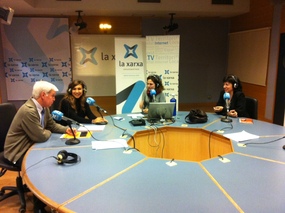
"Fent Via", a "Ràdio La Mina"
Tertúlia amb Miquel Strubell, Rosa Alentorn (coordinadora de la campanya "Signa un Vot" de l'ANC) i David de Montserrat, coautor del llibre "Lliures i morts".
Presenta: Xènia Xerrat
Redacció: Núria Orriols @nuriaorriolsc
Producció i Direcció: Antoni Jaume Morell
Programa radiofònic produït per "Ràdio La Mina" i distribuït per la "Xarxa Comunicació Local" a les emissores locals de Catalunya.
La Rosa i el Miquel entren en antena a partir del minut 22:00.
11/24/2013
ANC - DECLARACIÓ DE NOVEMBRE / NOVEMBER DECLARATION
El
Secretariat Nacional de l’Assemblea Nacional Catalana, reunit en sessió
ordinària el dia 16 de novembre de 2013, a Barcelona, tenint en compte els
moments transcendents que s’hauran d’afrontar en el futur immediat, ha
aprovat el seu posicionament, que vol fer públic amb aquesta
|
The National Secretariat of the
Catalan National Assembly, meeting in regular session on November 16, 2013 in
Barcelona, and considering the momentous issues that will have to be dealt
with in the immediate future, has adopted its position, and makes it public
by means of this
|
DECLARACIÓ
DE NOVEMBRE
|
NOVEMBER DECLARATION |
PREÀMBUL
L'Assemblea Nacional Catalana és una organització
popular, unitària, plural i democràtica, fonamentada en la democràcia de base
i en la unitat d'acció, i integrada per persones que volem que Catalunya
esdevingui un estat independent.
|
PREAMBLE
The National Assembly Catalan
is a popular, unitary, plural and democratic organization, based on
grassroots democracy and unity of action, and composed of people who want
Catalonia to become an independent state.
|
L'11 de setembre de 2012, l’Assemblea Nacional Catalana
va demostrar la capacitat de mobilització del poble català. I ho va fer amb
una gran manifestació que va reunir més d'un milió i mig de persones als carrers
de Barcelona. L'11 de setembre de 2013 hem tornat a demostrar no només
capacitat de mobilització, sinó també d'organització, en repartir-nos
ordenadament dos milions de persones al llarg del país, tot formant una
cadena de més de 400 quilòmetres.
|
On 11 September 2012, the Catalan
National Assembly demonstrated the Catalan people’s ability to
mobilize. And it did so with a huge demonstration that gathered more
than one million and a half people in the streets of Barcelona. On 11
September 2013, we again demonstrated the ability not just to mobilize but to
also organize, by spreading two million people across the country in an
orderly way, to form a chain over 400 km long.
|
Aquestes multitudinàries mobilitzacions populars, i
l'immens impacte que han aconseguit als mitjans de comunicació d’arreu del
món, han posat la independència de Catalunya en el centre del debat polític i
han col·locat la qüestió catalana damunt de la taula de les principals
cancelleries del món.
|
These massive popular
demonstrations, and the enormous impact they achieved in the media around the
world, have put the independence of Catalonia in the centre of the political
debate and have placed the Catalan issue on the tables of the world’s main
foreign ministries.
|
El resultat de les eleccions del 25
de novembre de 2012 i tots els estudis demoscòpics solvents acrediten l’ampli
suport de la ciutadania de Catalunya a l’exercici del dret a decidir. Però
encara més, la voluntat de constituir Catalunya com a un nou estat independent
ja és l’opció majoritària entre la ciutadania catalana.
|
The result of the 25 November
2012 elections and all solvent public opinion surveys attest to the ample
support of the citizens of Catalonia for exercising the right of
self-determination. Moreover, the desire for Catalonia to become a new
independent state is the Catalan citizen’s majority option.
|
Ni el fracàs de l’Estatut de
2005-2006 ni la crisi econòmica són elements suficients per explicar per què
hem arribat a aquesta situació. Com molts altres països d’Europa, vivim una
crisi de valors polítics tradicionals i de model de societat. En el nostre
cas, això es complementa amb la reivindicació nacional catalana, mai resolta
per l’Estat espanyol; un estat amb preocupants dèficits democràtics i amb una
incapacitat històrica de repensar-se ell mateix en clau plurinacional.
|
Neither the failure of the
2005-2006 Statute nor the economic crisis suffice, in themselves, to explain
why we have reached this situation. Like many other European countries, we
are living through a crisis of traditional political values and of the
social model. In our case, this is complemented by Catalonia’s national
demand, unresolved by Spain, a state with alarming democratic deficits and a
historic inability to reinvent itself as a multinational polity.
|
És a dir, vivim una situació de triple crisi:
econòmico-social, democràtica i nacional.
|
In other words, we are living
through three crises: economic-social, democratic and national.
|
La societat catalana, sense els mecanismes de poder que
defineixen un estat, ha hagut de trobar altres camins per al seu progrés i la
seva organització. Paradoxalment, això li ha conferit una solidesa
excepcional. Només això explica que, històricament i en l'actualitat,
Catalunya hagi pogut afrontar amb èxit reptes com la integració de
successives onades migratòries, preservant la convivència i la cohesió
social, o bé com la defensa dels més desafavorits, gràcies a la creació de
xarxes socials de suport.
|
Catalan society, without the
power mechanisms that define a state, has had to find other ways to progress
and to organize itself. Paradoxically, this has given it a unique
robustness. This alone explains why, historically and currently,
Catalonia has been able to successfully cope with challenges such as the
integration of successive waves of immigration, preserving social harmony and
cohesion, and defending the underprivileged, through social networks
providing support.
|
El poble català ha pres consciència que per lluitar
contra la triple crisi que pateix li calen vertaderes eines d’estat.
|
The Catalan people have
realized that to fight against the triple crisis real tools of state are
needed.
|
L’autonomia que suposadament garanteix la Constitució
espanyola de 1978 és un frau. Catalunya no és reconeguda com a nació, ni
l’autonomia assolida li és respectada. L’ofec econòmic sistemàtic a la
Generalitat, així com la recentralització i l'atac deliberat del nacionalisme
espanyol contra la llengua i la cultura dels Països Catalans, és una mostra
evident que l’encaix dins de l’Estat espanyol només és possible si estem
disposats a desaparèixer com a nació i com a poble
|
The autonomy supposedly
guaranteed by the 1978 Spanish Constitution is a bluff. Catalonia is not
recognized as a nation, nor is the level of home rule it has achieved
respected. The systematic economic throttling of the Catalan government,
as well as re-centralization and Spanish nationalism’s deliberate attack
against the language and culture of the Catalan-speaking lands, are clear examples
that Catalonia will only fit in Spain if we are willing to disappear as a
nation and as a people.
|
L'objectiu de l'Assemblea Nacional Catalana és
recuperar la independència política de Catalunya, mitjançant la constitució
d'un estat de dret, democràtic i social. L’Assemblea Nacional Catalana ha
canalitzat la força de la societat civil, que empeny cap a un horitzó
nacional nou i esperançador que ens permeti construir un país millor.
|
The aim of the Catalan National
Assembly is the recovery of Catalonia’s political independence through the
establishment of a democratic and social State where the rule of law
prevails. The National Assembly has channelled the energy of Catalan
civil society that is pushing towards a new, promising national horizon that
will allows us to build a better country.
|
Volem un Estat català perquè, com a poble que som, hi
tenim dret. Però, sobretot, el volem perquè l'entenem com una oportunitat per
construir un marc propi de relacions socials, econòmiques i polítiques. Un
estat al servei de les persones on els ciutadans siguin el centre de les
seves polítiques públiques.
|
We want a Catalan state because,
as a people, we have a right to one. But above all, we want it because
we regard it as an opportunity to build our own framework of social, economic
and political relations, a State at the people’s service, in which the
citizens will be at the centre of public policies.
|
Som en un món cada cop més interdependent, però on cap
estat renuncia a la seva independència. En aquest món, els catalans volem
participar amb veu pròpia en la construcció europea, perquè creiem en la
diversitat, la llibertat i la igualtat de les persones i dels pobles.
Altrament, Catalunya té totes les condicions per esdevenir un estat
perfectament viable i pròsper en termes econòmics. I aspira legítimament a
compartir les transformacions que Europa haurà d’afrontar per resoldre la
comuna crisi estructural i de valors actual, que és profunda i preocupant.
Res d’això és possible si som una simple regió espanyola.
|
We live in an increasingly
interdependent world, but where no state waives its own independence. In
this world, the Catalans want to take part with our own voice in building
Europe, because we believe in diversity, freedom and in the equality of individuals
and peoples. Moreover, Catalonia fulfils all the conditions to be able
to become a perfectly viable and prosperous state in economic terms, and
legitimately aspires to share the changes that Europe must face to overcome
the current common crisis of structures and values, which is deep and
disturbing. None of this is possible if we are simply a Spanish region.
|
Les forces polítiques han d’aparcar els tacticismes
partidistes i han de pensar en el bé comú. Per això, cal que actuïn amb la
màxima unitat possible per encarar amb força l'etapa definitiva del procés
d'independència. La unitat es pot expressar, segons les circumstàncies,
configurant un govern d’àmplia unitat, en forma d’amplis acords
parlamentaris, de llistes unitàries d’ampli espectre, o bé compartint punts
programàtics relatius al futur polític de Catalunya. En tot cas, i en darrera
instància, correspon als partits polítics i al seu sentit de la
responsabilitat concretar, de la millor forma possible, com s’ha d’expressar
la unitat que considerem que en aquests moments reclama la ciutadania.
|
Catalonia’s political forces
need to put aside their partisan tactics and think about the common
good. This is why they need to work with the greatest possible unity to
firmly face the final stage of the process to independence. Unity can be
expressed, depending on the circumstances, by forming a broad unity
government, by means of wide-ranging parliamentary agreements, by means of
broad united election lists, or by sharing programmatic positions regarding
Catalonia’s political future. In any event and in the last analysis, it
is up to the political parties and their sense of responsibility to specify,
in the most appropriate way, how to express the unity which we believe
citizens currently call for.
|
Sabem d’on venim i on volem anar, però cal dir també
com podem arribar-hi. Per això, en el moment actual del debat polític,
l’Assemblea Nacional Catalana creu necessari assenyalar uns punts que
considera irrenunciables.
|
We know where we come from and
where we are going, but we must also say how we can get there. This is
why, at the present stage in the political debate, the Catalan National
Assembly considers it is necessary to underline a number of points it feels
are inalienable.
|
Som davant d’un debat estrictament polític, sense
limitacions jurídiques. En democràcia, només al poble de Catalunya li
correspon decidir sobre el seu futur polític. En aquest sentit, la celebració
d’una consulta sobre la independència del nostre país és un objectiu
irrenunciable que no pot ser objecte de retards ni d’abaratiments.
|
We are facing a strictly
political debate, with no legal constraints. In democracy, it is only up
to the people of Catalonia to decide on its political future. In this
regard, holding a referendum on the independence of our country is an
essential objective that cannot be subject to delays or watering-down
|
Per tot això, el Secretariat Nacional de l’Assemblea
Nacional Catalana fa pública aquesta
PRESA DE POSICIÓ:
|
For all these reasons, the
National Secretariat of the Catalan National Assembly make public its
POSITION:
|
1. La celebració d’una consulta sobre el futur polític
de Catalunya durant l’any 2014 és irrenunciable.
|
1. A referendum on the
political future of Catalonia must of necessity be held in 2014.
|
2. La consulta ha de tenir lloc al més aviat possible,
preferentment abans del 31 de maig de 2014, i s’ha de convocar en el moment
que es concreti el marc legal aplicable.
|
2. The referendum must
take place as soon as possible, preferably before 31 May 2014, and must be
convened as soon as the applicable legal framework has been defined.
|
3. La petició del Parlament de Catalunya al Congrés
dels Diputats de poder organitzar la consulta no pot servir d’excusa per
demorar-la. El Parlament ha de fixar una data límit per rebre’n resposta.
Passada aquesta data cal aplicar la Declaració de Sobirania i del Dret a
Decidir del poble de Catalunya, aprovada pel Parlament el 23 de gener
d’enguany i convocar la consulta d’acord amb la legislació catalana.
|
3. The request addressed
by the Parliament of Catalonia to the Spanish Congress of Deputies to be able
to organise the referendum must not be used as an excuse for delaying
it. Parliament should fix a deadline to receive a reply. After this
date, the Declaration of Sovereignty and the Right to Decide of the People of
Catalonia, adopted by Parliament on 23 January this year, should be applied
and the referendum convened under Catalan law.
|
4. La consulta ha de tenir una sola pregunta, directa i
clara, que s’ha de poder respondre de forma afirmativa o negativa, i ha de
preguntar explícitament sobre la independència de Catalunya. Qualsevol altra
possibilitat seria un frau, ja que el resultat no seria determinant i podria
no ser reconegut per la comunitat internacional. En aquest sentit,
l'Assemblea Nacional Catalana proposa la següent pregunta: “Vol que Catalunya
sigui un Estat independent?”
|
4. The referendum has to be a single, direct and clear question, to
which an affirmative or negative answer can be given, and has to specifically
ask about the independence of Catalonia. Any other possibility would be
a fraud, because the result would not be decisive and might not be recognized
by the international community. To this end, the Catalan National
Assembly proposes the following question: "Do you want Catalonia to be
an independent state?"
|
5. Per encarar l'actual etapa amb garanties d'èxit és
imprescindible la màxima unitat d'acció entre les institucions catalanes, la
societat civil i els partits polítics. Les forces polítiques catalanes han
d’actuar amb el màxim sentit de la responsabilitat i amb unitat, perquè així
ho reclama una gran majoria de la ciutadania, i posant els interessos
col·lectius per davant dels interessos de partit. La unitat d’acció política
ha de fer-se visible amb acords parlamentaris amplis i permanents i, quan
calgui, amb la formació d’un govern de concentració nacional. La unitat serà
la millor eina davant dels intents permanents dels aparells de l’Estat
espanyol de torpedinar el procés i per defensar les institucions en cas de
dissolució o intervenció de la Generalitat.
|
5. To address the current
phase successfully the greatest unity of action between the Catalan
institutions, civil society and political parties is essential. Catalan
political forces must act with the utmost sense of responsibility and with
unity, for this is what the vast majority of citizens call for, and putting
collective interests ahead of party interests. The unity of political
action must be visible through permanent and broad parliamentary agreements
and, where appropriate, with the formation of a government of national
concentration. Unity is the best tool in the face of the constant
attempts of the Spanish state apparatus to undermine the process, and to
defend our institutions should the Catalan government be dissolved or
intervened.
|
6. Les eleccions europees del 25 de maig de 2014 seran un repte
i una oportunitat per a Catalunya. Caldrà mobilitzar-se per assolir una
participació tan alta com sigui possible, perquè la nostra determinació
nacional serà observada i valorada pels països europeus en funció dels vots
obtinguts per les candidatures favorables a la consulta i a la independència.
L’Assemblea Nacional Catalana crida, doncs, a treballar des d’ara per fer
possible una candidatura d’ampli espectre sociopolític, que pugui tenir el
suport del màxim nombre de forces polítiques i de moviments populars.
|
6. The May 25 2014 European elections will be a challenge and an
opportunity for Catalonia. Mobilization will be needed to achieve as
high a level of participation as possible, because our national determination
will be observed and evaluated by European countries as a function of the
votes obtained by the candidates supporting the referendum and
independence. The Catalan National Assembly thus makes a call for to
work from this moment on, to build a list with a broad socio-political base,
which can have the support of as many political parties and popular movements
as possible.
|
7. L’Assemblea Nacional Catalana seguirà amb atenció l’evolució
de la situació i, si cal, convocarà noves mobilitzacions per garantir el dret
democràtic de la ciutadania a ser consultada de forma clara sobre el futur de
Catalunya i per defensar les nostres institucions nacionals.
Barcelona, 23 de novembre de 2013
|
7. The Catalan National
Assembly will closely monitor developments and will call, if need be, for new
demonstrations to ensure the democratic right of citizens to be clearly asked
about the future of Catalonia and to defend our national institutions.
Barcelona, November 23, 2013
|
Subscriure's a:
Missatges (Atom)


