Dies des del Referèndum de l'u d'octubre de 2017

Fes una piulada

Cercar en aquest blog

StatCounter

Es mostren els missatges amb l'etiqueta de comentaris Catalan. Mostrar tots els missatges

1/21/2016

CELRM

The application of the European Charter for Regional or Minority Languages by Spain

Press release - DC007(2016)

Regional and minority languages in Spain: Council of Europe issues new evaluation report

Strasbourg, 21.01.2016 - The Committee of Ministers of the Council of Europe today issued six recommendations to the Spanish authorities on the application of the European Charter for Regional or Minority Languages. It also published a report by a committee of experts assessing Spain´s compliance with the Charter....

Recommendation CM/RecChL(2016)1
on the application of the European Charter for Regional or Minority Languages by Spain

(Adopted by the Committee of Ministers on 20 January 2016 at the 1245th meeting of the Ministers’ Deputies) 
The Committee of Ministers,
In accordance with Article 16 of the European Charter for Regional or Minority Languages;
Having regard to the declarations made by Spain on 9 April 2001;
Having taken note of the evaluation made by the Committee of Experts on the Charter with respect to the application of the Charter by Spain;
Bearing in mind that this evaluation is based on information submitted by Spain in its national report, supplementary information provided by the Spanish authorities, information submitted by bodies and associations legally established in Spain and information obtained by the Committee of Experts during its on-the-spot visit;
Having taken note of the comments made by the Spanish authorities on the contents of the Committee of Experts' report;
Recommends that the Spanish authorities take account of all the observations and recommendations of the Committee of Experts and, as a matter of priority:
   1. amend the legal framework with a view to making it clear that the criminal, civil and administrative judicial authorities in the Autonomous Communities can conduct the proceedings in co-official languages at the request of one party;
   2. continue to implement legal and step up practical measures aimed at ensuring that an adequate proportion of the judicial staff posted in the Autonomous Communities concerned by the application of Article 9 of the Charter has a working knowledge of the relevant languages;
   3. continue to implement legal and step up practical measures aimed at ensuring the adequate presence of the co-official languages in the State administration at the level of the Autonomous Communities;
   4. continue to implement measures to ensure the presence of co-official languages in public services, especially in health care services;
   5. continue to ensure that the offer of trilingual education does not adversely affect the protection and promotion of regional or minority languages;
   6. consider extending the recognition of those regional or minority languages with a co-official status in six Autonomous Communities to other Autonomous Communities provided that there is a sufficient number of users of the regional or minority language involved.


...

ARAGON

p. 15:

The Committee of Experts strongly urges the authorities to take the necessary steps to recognise the status of Catalan and Aragonese as traditionally spoken languages in Aragon.

p. 17:

The Committee of Experts strongly urges the authorities to adopt a specific legal framework for the protection and promotion of Catalan and Aragonese in Aragon as separate languages.


Catalan in CATALONIA


p. 30:

The Committee of Experts again strongly urges the authorities:
- to amend the legal framework with a view to making it clear that the criminal, civil and administrative judicial authorities in Catalonia will conduct the proceedings in Catalan at the request of one party;
- to take the necessary measures to ensure, as appropriate, that the parties to a proceeding are specifically informed of the obligation of the judicial authorities in Catalonia to conduct the proceedings in Catalan if one of the parties so requests, in conformity with the undertakings entered into by Spain under Article 9 para. 1.a.i, 1.b.i and 1.c.i of the Charter;
- to take the necessary measures to increase the proportion of judicial staff in Catalonia at all levels and particularly among judges and prosecutors, who are able to use Catalan as a working language in courts.

p. 31:
The Committee of Experts urges the Spanish authorities to substantially increase the number of Catalan-speaking staff in the competent state administration offices and to develop adequate training schemes.

 Catalan in the BALEARIC ISLANDS


p.56:

The Committee of Experts strongly urges the authorities to make Catalan-medium pre-school, primary and secondary education available in the Balearic Islands.

p. 57:

The Committee of Experts strongly urges the authorities to make available technical and vocational education in Catalan.

 p. 59:

The Committee of Experts urges the Spanish authorities to take the following measures with a view to complying with Article 9:
- amend the legal framework with a view to making it clear that the criminal, civil and administrative judicial authorities in the Balearic Islands will conduct the proceedings in Catalan at the request of one party;
- take the necessary measures to ensure, as appropriate, that the parties to a proceeding are specifically informed of the obligation of the judicial authorities in the Balearic Islands to conduct the proceedings in Catalan if one of the parties so requests, in conformity with the undertakings entered into by Spain under Article 9 para. 1.a.i, 1.b.i and 1.c.i of the Charter;
- take the necessary measures to increase the proportion of judicial staff in the Balearic Islands, at all levels and particularly among judges and prosecutors, able to use Catalan as a working language in courts;
- develop adequate training schemes for judicial staff as well as for lawyers.


Valencian in VALENCIA

p. 69:

The Committee of Experts strongly urges the Spanish authorities:
- to amend the legal framework with a view to making it clear that the criminal, civil and administrative judicial authorities in Valencia will conduct the proceedings in Valencian at the request of one party;
- to take the necessary measures to ensure, as appropriate, that the parties to a proceeding are specifically informed of the obligation of the judicial authorities in Valencia to conduct the proceedings in Valencian if one of the parties so requests, in conformity with the undertakings entered into by Spain under Article 9 para. 1.a.i, 1.b.i and 1.c.i of the Charter;
- to take the necessary measures to increase the proportion of judicial staff in Valencia, at all levels and particularly among judges and prosecutors, who are competent in the use of Valencian as a working language in courts;
- to develop adequate training schemes for judicial staff as well as for lawyers.


p. 70:

The Committee of Experts urges the Spanish authorities to substantially increase the number of Valencian-speaking staff in the relevant state administration offices and to develop adequate training schemes.


p. 75:

The Committee of Experts urges the Spanish authorities to take the necessary measures to encourage and/or facilitate the creation of one public TV channel and a public radio station in Valencian.

-------------------------------

Recull de premsa, 21/1/2016.

3/23/2012

MEPs protest to EU Council and Commission over dire situation for Catalan in the Balearic Islands

Source: Eurolang http://www.facebook.com/pages/Eurolang/174907085047

EUROLANG / EUROPEAN LANGUAGE EQUALITY NETWORK

PRESS RELEASE

MEPs protest to EU Council and Commission over dire situation for Catalan in the Balearic Islands
A cross-party grouping of MEPs led by the Hungarian MEPs Csaba Sogor (Hungarian minority, Romania) and Edit Bauer representing Hungarians in Slovakia (EPP), signed by EFA, ALDE and S&D Intergroup members, and after lobbying by Eurolang- ELEN and Obra Cultural Balear (OCB), have sent a formal tabled question to the EU Council and Commission protesting against measures that undermine Catalan in Illes Balears and which have resulted in an ongoing hunger strike by pensioner Jaume Bonet.

The letter asks whether the Commission, as 'Guardian of the Treaties', considers that the measures adopted by the Balearic government undermine "respect for linguistic diversity” and constitutes discrimination on the grounds of language, which under EU law is prohibited?

Furthermore, it asks the Commission what it intends to do in order to protect national minority rights in this situation.

The letter underlines that the measures adopted by the regional government contravene European standards on lesser used language protection found in the EU Lisbon Treaty, the Charter of Fundamental Rights, and the Council of Europe's European Charter for Regional or Minority Languages and Framework Convention for the Protection of National Minorities, all ratified by Spain.

It adds that the measures also break cross-party political consensus on Catalan promotion and undermine successful language regeneration.

That the letter has also the support of several members of the European Peoples Party, of which the PP Iles Balears government are members, is highly significant - a significance that will have resonance in European, national and regional political circles. It illustrates a new mood at the European level, under the ‘new European architecture for human rights,’ that it is no longer acceptable for governments to attack or undermine a regional language.

The PP government of Illes Balears, led by José Ramón Bauzá, voted a week ago to amend the law on Catalan normalisation which removes Catalan language requirements in order to work in the public administration. The move has been heavily criticised by NGOs for breaking a decades long cross-party political consensus on regenerating the language.

Specialists in the field of minority language rights have highlighted what they see as an abusive use of the concept of 'freedom' to implement policies (some not even included in the election manifesto) to annul existing measures seeking to guarantee minority language speakers' rights. Similar measures by the government in the hands of the same party, in Valencia, also based on the same principle, have also been accused of failing to support the language and its use by speakers.

So far there has been no reaction from the Balearic government while Senyor Bonet-Moll’s condition continues to weaken. He has lost 20 kilos (44 lbs), has a heart complaint, and has had his visiting hours restricted.

OCB are organising a mass demonstration against changes in the language law and in support of Jaume Bonet for Sunday 25th March in Palma.(Eurolang 2012)

ENDS

Editors Notes

ELEN is the new European level network working to promote lesser used languages replacing the well known EBLUL organisation.

Links
OCB http://www.ocb.cat
Eurolang http://www.facebook.com/pages/Eurolang/174907085047

3/12/2012

European Charter for Regional or Minority Languages (Council of Europe)

Is it too late to bring to the Committee of Experts' notice a number of recent issues more or less directly related to the (non)compliance with the European Charter for Regional or Minority Languages by the authorities in Spain, as regards the Catalan language?


    11/11/2010

    Valencian = Catalan (and EILC, Erasmus Intensive Language Courses)

    Following my report (05 november, 10:35) about Valencian being treated as a separate language from Catalan by the Spanish authorities, thus allowing those competing to become judges to pass two Catalan exams in Valencia and in Catalonia, and get twice the points, the EU decision to cofund EILC courses in "Catalan" and "Valencian" separately, taken in 2009, is at last being taken to the Spanish Congress by three political parties. Any number of court judgments (over 15!), as well as several Valencian university statutes and the scientific community as a whole, recognise what the Spanish EU presidency website www.eu2010.es also made perfectly clear: It spoke of "the language which is known as catalan in the Autonomous Region of Catalonia and in the Autonomous Region of the Balearic Islands and wich (sic) is known as valencian in the Autonomous Region of Valencia." (though the website search engine locates the quote, the hyperlink to the original page is no longer active, for reasons the Spanish government might be able to explain). The irony is double: firstly, that this distinction was made by the programme committee over a year ago (you can see the way the organizing universities are classified by the two headings here, or the student's application form, for instance; note that seven courses are offered for each "language", whereas the use of the language is much greater in universities in Catalonia, which also has a much higher student population), so the political parties have been very slow to react. And secondly, that every single application for these courses was included in the joint proposal made by the Xarxa Vives network, "a unique platform with value-added and innovative services for universities in the Catalan-speaking territories" founded by these very universities! That the Vives network acted on their behalf is abundantly clear from the official list of funded courses.

    11/16/2009

    Videos on Catalan and Catalonia


    1. Catalan, a business opportunity:
    4 min 48 sec


    2. Independence for Catalonia:
    1 min 21 sec


    3. U.S. Secretary of State, Hillary Rodham Clinton joins a Town Hall meeting at the European Parliament:
    0 min 48 sec


    4. Catalonia: a nation of Europe:
    5 min 0 sec
    Icludes a speech by the outstanding Catalan 'cellist, Pablo (Pau) Casals (1876–1973) at the United Nations.


    5. Catalonia is a nation:
    2 min 20 sec (just pictures)


    6. Èric and the Phoenix Army:
    9 min 48 sec
    Documentary on a 14-year old who was arresetd by twenty anti-terrorist Spanish policemen .

    An incredible but true story: Spanish authorities prosecute child for terrorism when he e-mails companies requesting labelling in Catalan language. A Harry Potter fan, he signed as the "Phoenix Army". The case went all the way to Spanish High Court!


    Part 1: http://www.youtube.com/watch?v=aIiRFSCgGu4&hl
    Part 2: http://www.youtube.com/watch?v=Aqvs3988wbU
    Part 3: http://www.youtube.com/watch?v=TvlUpoffohM
    Part 4: http://www.youtube.com/watch?v=FpKmmCxOcGQ
    Part 5: http://www.youtube.com/watch?v=eAWyX_lWPuQ

    2/10/2008


    Linguistic peace under threat in Catalonia: Spain's Partido Popular instrumentalise language issues to try and win votes

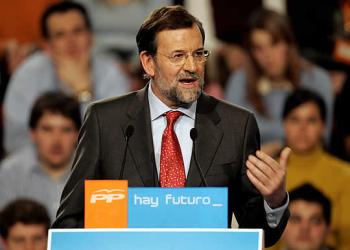
    The Spanish People's Party, in opposition since losing the General Election in 2004, has recently published its Election Manifesto, a 50-page document with 234 policy statements. Several of them are couched in sugary terms which may at first glance seem reasonable to the layman, but which on closer observation are seen to conceal disturbing intentions. If carried out, they could lead to serious social conflict. Let us briefly look at four of them.

    114. Garantizaremos por ley el derecho a utilizar y a estudiar en castellano en todas las etapas del sistema educativo.

    = "We shall ensure by law the right to use Spanish and to study in it at all levels of the education system".

    This is designed simply and solely to strike at the very heart of the school system on Catalonia. It was democratically devised by the Parliament of Catalonia over 20 years ago and sets out to make sure that schoolchildren are not separated by language, that is, that there is no risk of cultural apartheid. By law, all students have to achieve a full command of both Catalan and Spanish (the two official languages) by the end of their compulsory education. Is this not enough? We're talking here about two Romance languages: the speakers of one can learn the other quite quickly. The Parliament of Catalonia laid down the right to use and to study in Catalan at all levels of the education system, simply because it has been the language of the territory for 800 years or more. Spanish is a complusory subject in all grades.

    The People's Party's proposal is built upon the quite unstable foundations of a couple of bogus studies that claim that Spanish-speaking children do badly at school because lessons are taught mainly in Catalan. It would have a highly divisive effect on Catalan society, and shatter the current levels of Catalan that ALL school children attain (and which, overall, are lower than the levels of Spanish).

    201. Desarrollaremos una Política Nacional para la Mejora de la Calidad de la Educación, que proporcione estabilidad al sistema y garantice entre otros objetivos: la reducción del fracaso escolar, la igualdad de oportunidades en el sistema de becas, la solidaridad, la movilidad de los alumnos y el derecho a estudiar en castellano en todas las etapas del sistema educativo.

    = "We shall develop a National Policy for Improving the Quality of Education, which will give the system stability and which will ensure, among other objectives: the reduction of student failure, equal opportunities in the grants system, solidarity, pupil mobility and the right to study in Spanish at all levels of education".


    The People's Party insidiously links the "right" to study in Spanish (a false right: being an official language merely means that all pupils have to learn it!) with a policy aimed at quality in education. What will "stability" put an end to? What does "solidarity" mean, when the fiscal deficit endured by Catalonia is already crippling? "Pupil mobility and the right to study in Spanish" could easily mean laying down that all university classes where there is even a single student from the rest of Spain have to be in Spanish (about 60% of BA classes are in Catalan).

    204. Desarrollaremos un modelo de enseñanza bilingüe (castellano e inglés) o trilingüe en aquellas Comunidades Autónomas con lengua cooficial, asegurando la formación del profesorado en inglés. Articularemos un Programa Nacional de Becas para aumentar las oportunidades de estudio en el extranjero.

    = "We shall develop a model of bilingual (Spanish and English) or trilingual (in regions which have their own official language) education, and ensure the training of teachers in English. We shall design a National Grants Programme so as to increase ooportunities for studying abroad."


    The People's Party seems to be unaware that the Spanish parliament does not have the power to impose bi- or trilingual models in schools. It is the regional Parliaments that have such powers (even though they are subject to constraints, unlike the German länder, Flanders or Scotland, for instance).

    113. Esta reforma [de la Constitución] tendrá como ejes básicos:
    [...] • Dotar al Estado de los instrumentos necesarios para garantizar la igualdad de los españoles en derechos, deberes y oportunidades.


    = "This reform (of the Constitution) will have as its basic aims [...] to provide the State with the instruments needed to ensure the equality of Spaniards in rights, duties and opportunities."

    Again, the language used here sounds wonderful: "equality", "rights and duties", "opportunities". But there are sufficient instruments built into the Spanish Constitution already, so perhaps the party has a hidden agenda, once again aimed at the Catalans (note that nowhere in the whole of Spain does this party win as few votes as it does in Catalonia; is this a cause or an effect of these election pledges, probably aimed first and foremost at the party's clientele in the rest of Spain?).

    Conclusions

    None of this would seem so threatening were it not for the precedents of the experience of previous terms in office of the Partido Popular, notably in the period 2000-2004. The fact that the Partido Popular is a party that in many ways smacks of the old Francoist ideology, and significantly, has repeatedly refused to vote in favour of motions which condemn the practices of the Franco dictatorship, should put democratic Europe on guard. As the former President of the Italian Republic Francesco Cossiga has often put it, the Partido Popular are in many ways the heirs of all that Franco stood for. He indeed described former PP leader José María Aznar as a "legionary sergeant".

    Once again, the Spanish conservatives are resorting to language (which simply ISN'T a social issue in Catalonia) as a political hatchet. They know it wins votes for them in other parts of Spain, where grossly distorted stories circulate about what goes on in Catalonia (for instance, as shown in a grotesque programme on the PP-controlled Madrid TV channel some months ago). In 2008 Europe, where else may we see this kind of territorial hatred being fanned to favour State-nationalist vote to the detriment of the identity and rights of stateless nations with poor political coverage? Perhaps it will now become clearer to many why it is that so many Catalans would like their country to be a sovereign state in the EU, instead of remaining attached to Spain and being subjected to the whims of Spanish nationalist parties!


    Baròmetre de l'ús del català a Internet