Margallo:"Los catalanes están más que amparados por el servicio exterior d'ESP"— David d'Enterria *X (@denterd) 19 febrer, 2016
Vots #27S de catalans a Roma=PERDUTS pic.twitter.com/Ca7FjJ9ZeD
2/20/2016
David d'Enterria qüestiona el paper dels consolats espanyols
Objectivity
Journalists often come to Catalonia from abroad to write chronicles or film documentaries on what since about 2011 is called "the process", the political initiative driven by the non-partisan grassroots movement that has held breaking news rallies and other events for independence, and hundreds of local, unofficial referenda on the issue.
Literally hundreds of books have been written on the subject, most of which by specialists in the field of Economics, Political Science, Journalism, European affairs.. And the list goes on. My personal estimation is that at least 80% allow the reader to reach the conclusion that for Catalonia independence is not only possible but also essential, if the Catalan people want to continue existing into the foreseeable future.
Reputable journalists naturals seek to offer a "balanced" view of the issues at hand. They have a duty to do so. And to the extent that they allow the different parties (or sides) to express their views, they can claim to present an "objective" outcome.
However, when (some of) those views, expressed with a straight face, are based on fallacies or myths, often uncritically repeated in the media, then what is questionable is the "objectivity" of the sources, or rather, of the claims being made. Often we find that such purported "facts" have been torn to shreds by the opposing party. Let me give two examples. Citizenship and pensions.
In the run-up to the September elections in Catalonia (which some hoped would be regarded by all the electorate as a plebiscite on independence, given Spain's refusal to authorized one) the fear-mongering Unionist side had around that in an independent Catalonia, not recognised by the international community, Catalans would lose their condition and privileges as EU citizens. As has been pointed out a couple of years earlier (and ignored by the Unionists) the Spanish constitution - which they brandish as if it were the home bible - clearly states that Spanish citizens cannot be forcibly deprived of their nationality. Spanish Prime Minister Rajoy in a prime time interview was bowled over when confronted with this fact.
On the pensions issue, for years now the Unionist discourse has claimed that in an independent Catalonia people would no longer receive their pension. This again was denied at the last minute (in the face of overwhelmed evidence the contrary) by Rajoy just a few days before the election. The truth is Spain is duty-bound to continue paying pensions wherever the pensioners live, and whether or nit they acquire citizenship of another country.
Do all foreign journalists have the background knowledge to ensure that claims such as these, which do not have objective backing, are duly exposed by supporters from the opposing camp?
Or, for that matter, do all foreign journalists know how and by whom the organisations defending (quite legitimately!) opposing views on the Catalans (including the camp that deies the very existence of the Catalan people, and therefore any collective right at all) are funded? This is not a lesser matter.
The list could go on. All I ask of these journalists, whose presence and interest in Catalonia are of course very welcome, is not to accept at face value many "facts" which do not stand up to scrutiny and cannot therefore be treated as "objective".
In the end, the "process" needs not only to be democratic. It is about democracy itself, and about the well-informed electorate that is essential for it to work!
2/14/2016
Muriel
CLICA A "Més informació" PER VEURE LA RESTA / CLICK ON "Més informació" TO SEE THE REST
2/11/2016
DivisionAzul
La Iglesia rinde tributo a los que lucharon para Hitler en un cementerio madrileño de titularidad pública
CLICA A "Més informació" PER VEURE LA RESTA / CLICK ON "Més informació" TO SEE THE REST
ETV
Presentat per Jaume Marfany.
Les constitucions i llibertats de Catalunya
3 de febrer de 2016; 26 minuts 33 segons
Amb Víctor Cucurull i Agustí Carles.
**
La corrupció
20 de gener de 2016; 28 minuts
Amb Víctor Cucurull i Joan Vinyeta.
**
Anteriors programes (Sanitat, l'afusellament de Txiqui...): http://etv.xiptv.cat/la-clau-de-la-nostra-historia/
1/31/2016
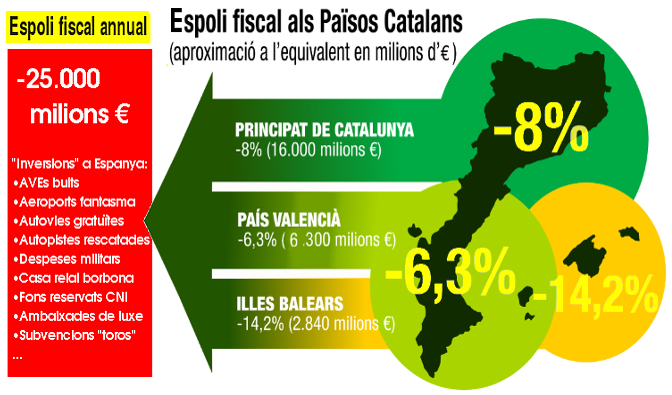
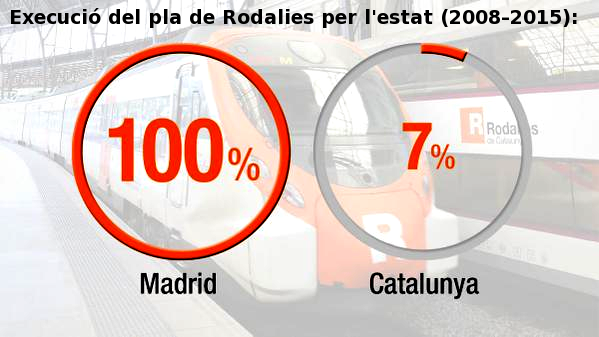
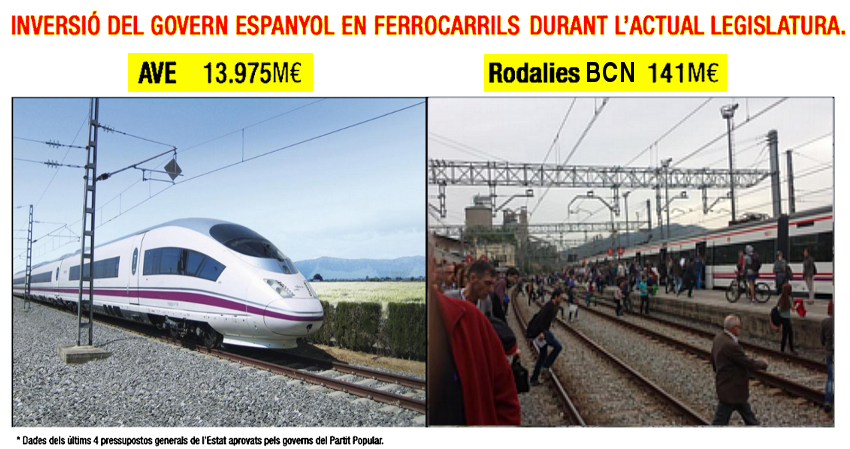
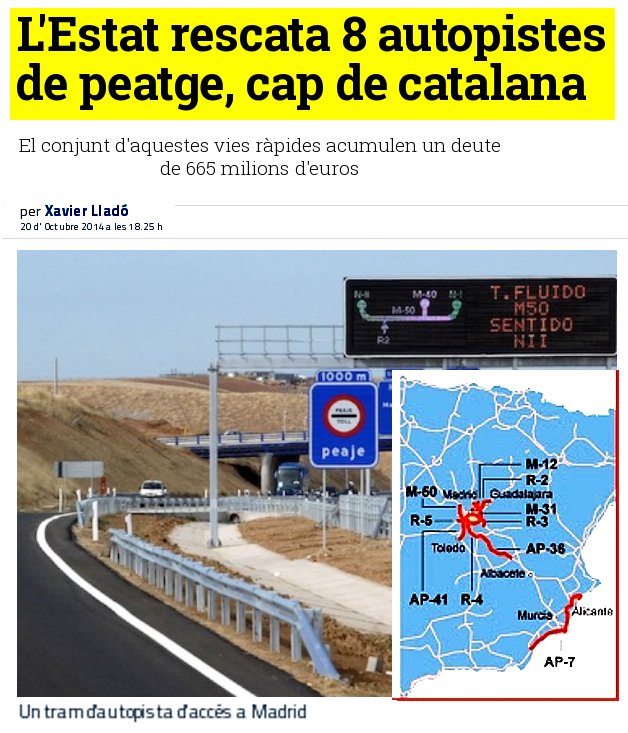
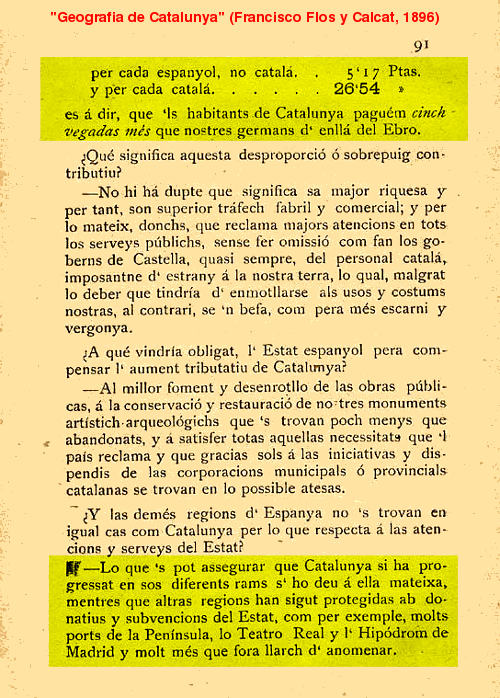
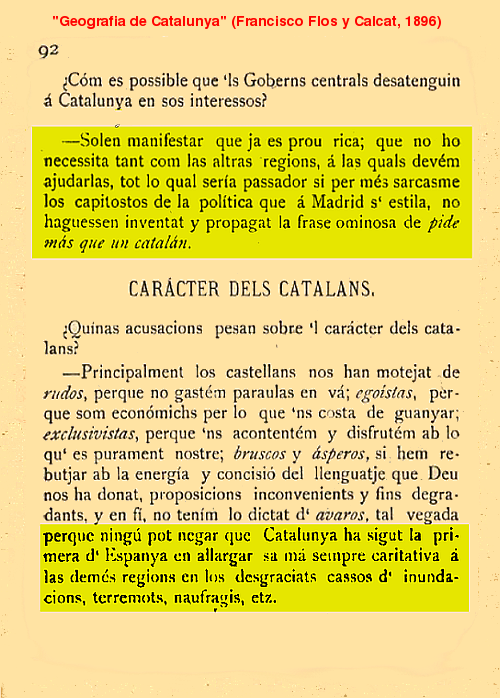
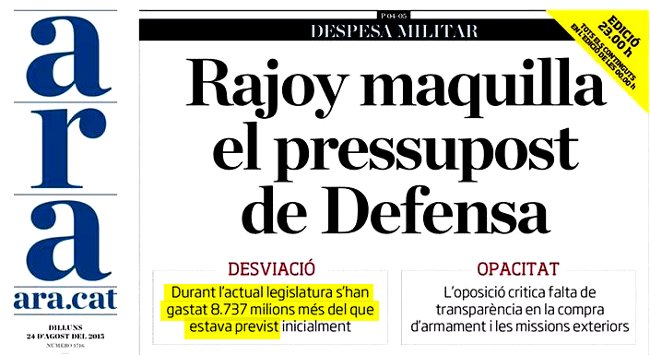
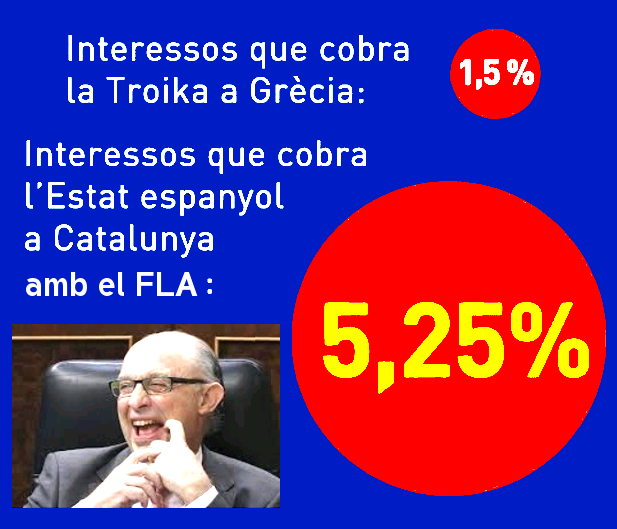
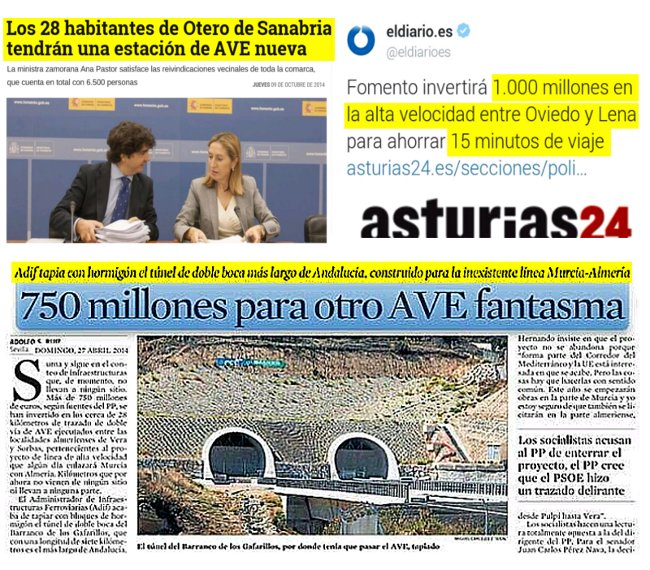
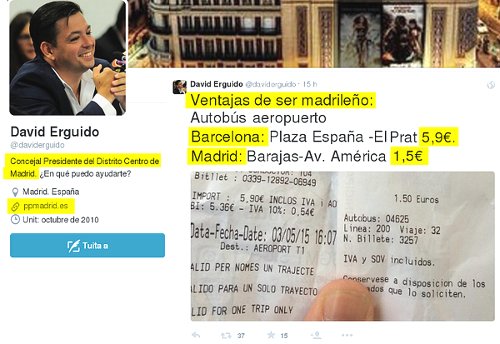
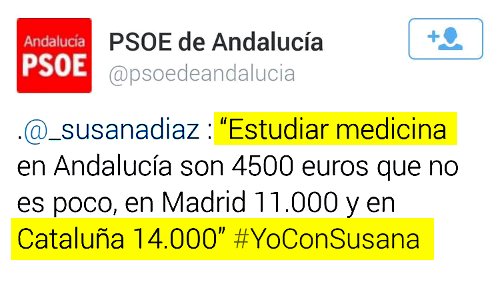
El Procés Ens Roba?
Exemples [irònics!] d'
2) Rescat públic d'autopistes de peatge FORA de Catalunya.
3)
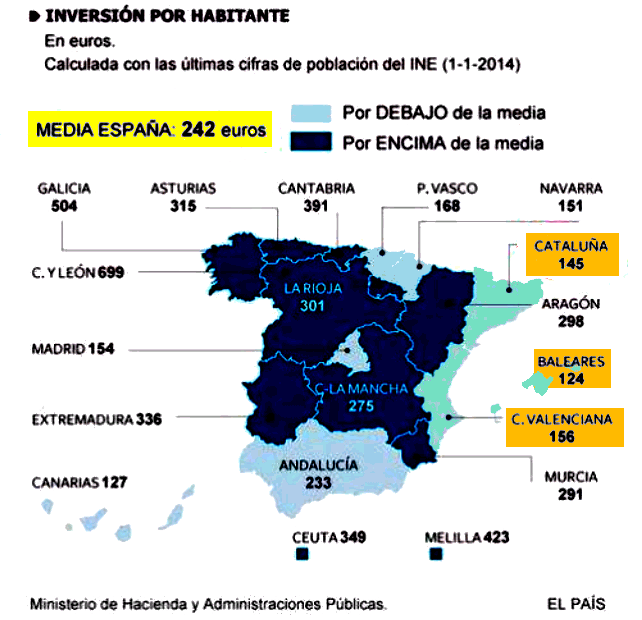
6) Inversió per habitant. Pressupostos Generals 2015
7) Ens cobren interessos pels NOSTRES diners per pagar Sanitat/Educació/..
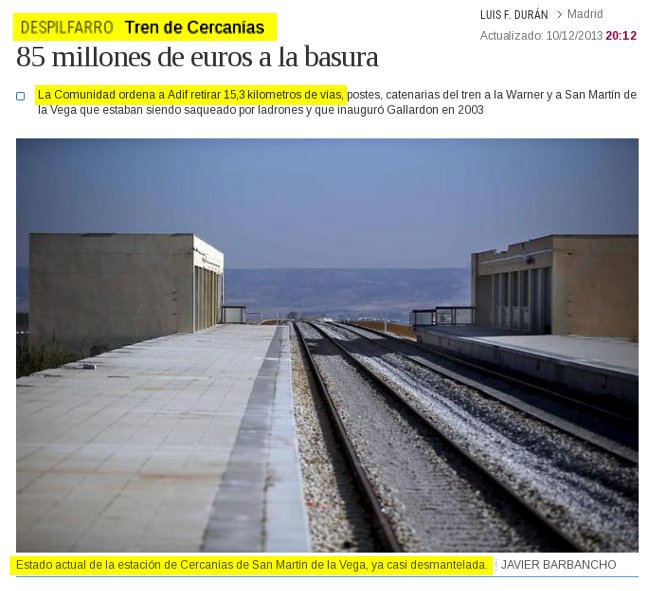
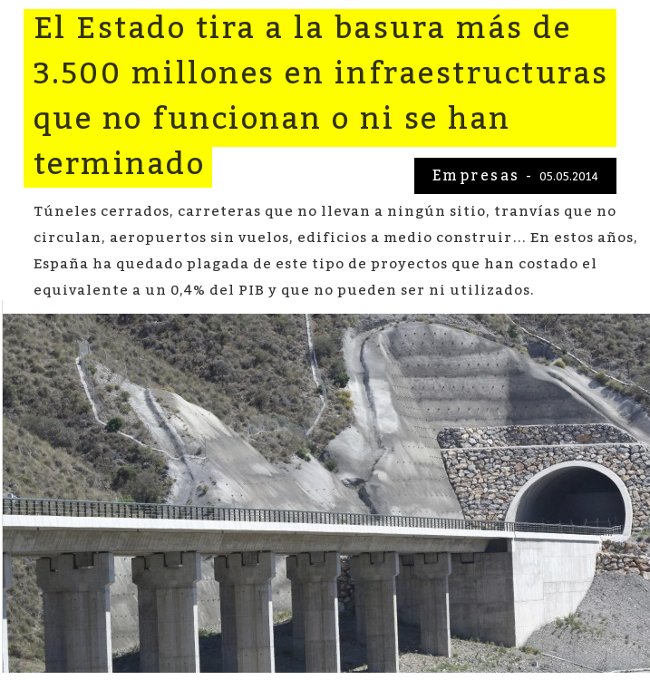
8) Milers de milions d'€ llençats per la finestra en AVEs buits
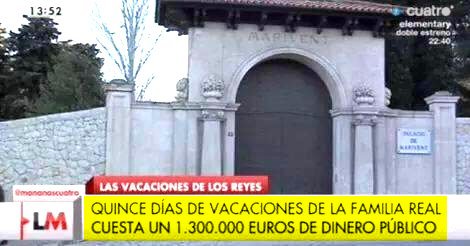
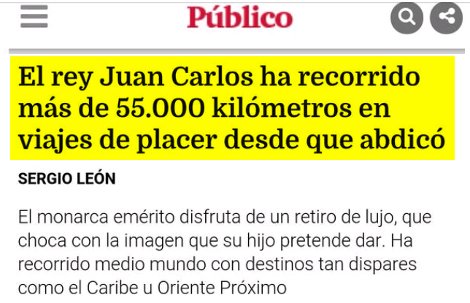
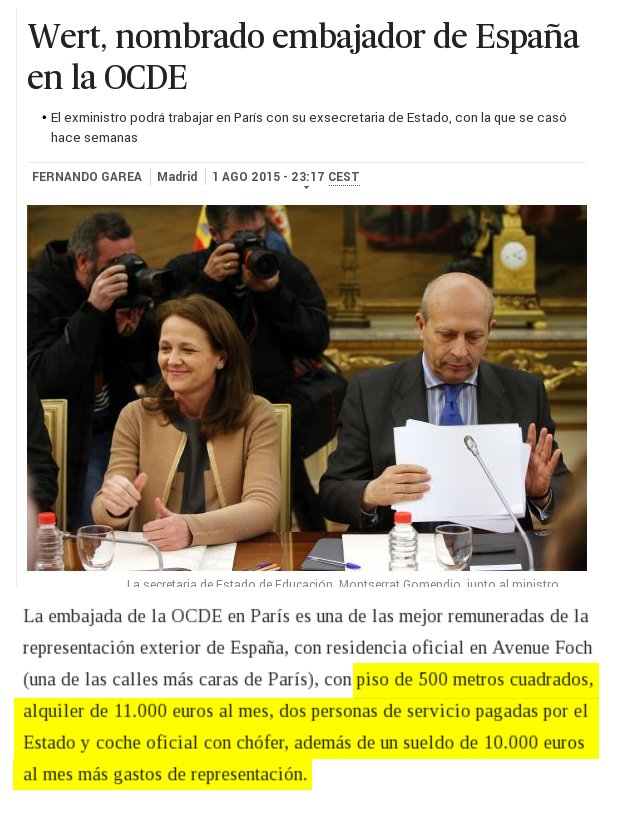
10) Milions d'€ gastats en monarquia borbònica corrupta
11) Paguem 21% de 1.350 milions indemnitzats a Florentino x l'estafa Castor
12) +53% infrastructures a Madrid que BCN (1991–2011)
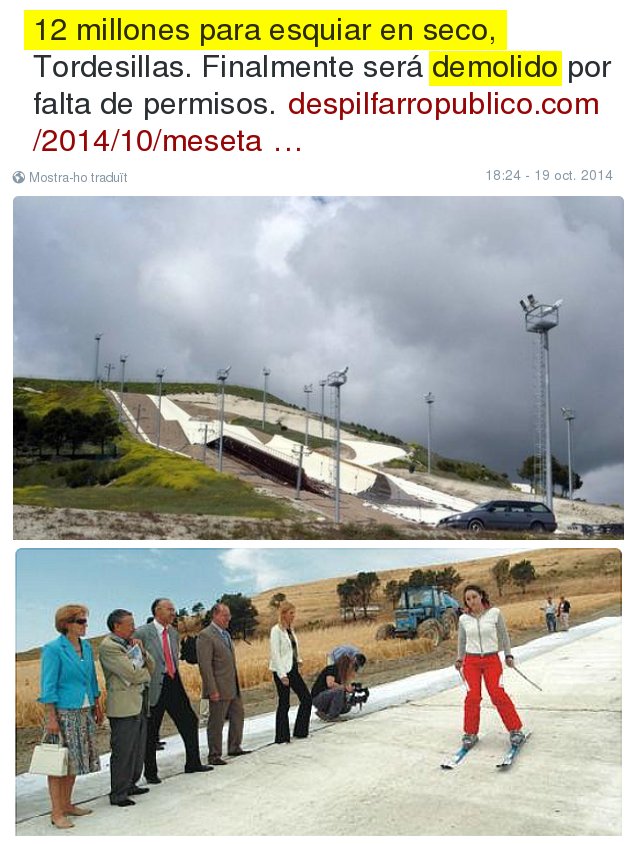
13) €12 milions públics a l'escombraria: Pista d'esquí seca a la meseta
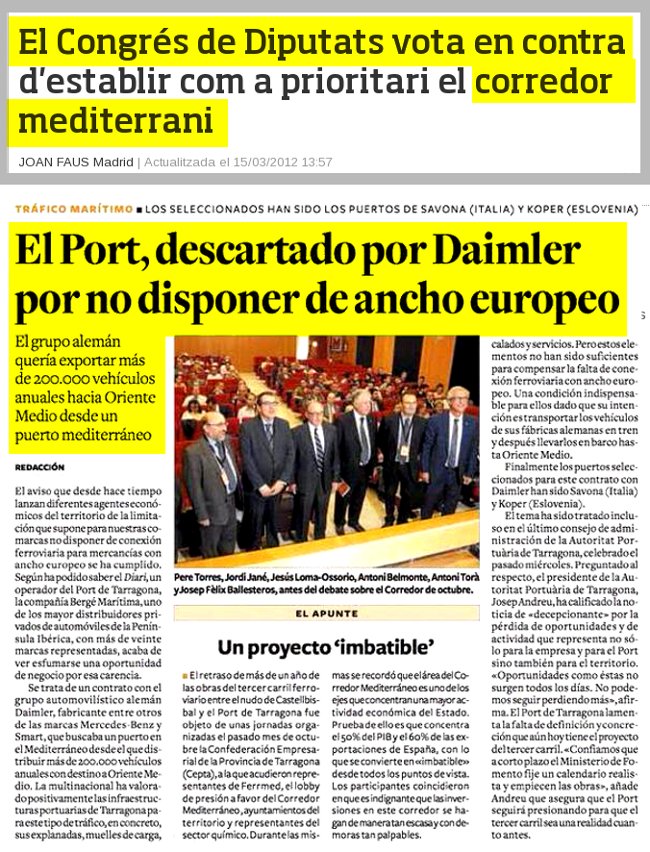
14) Exportació 200.000 vehicles/any perduda x manca de
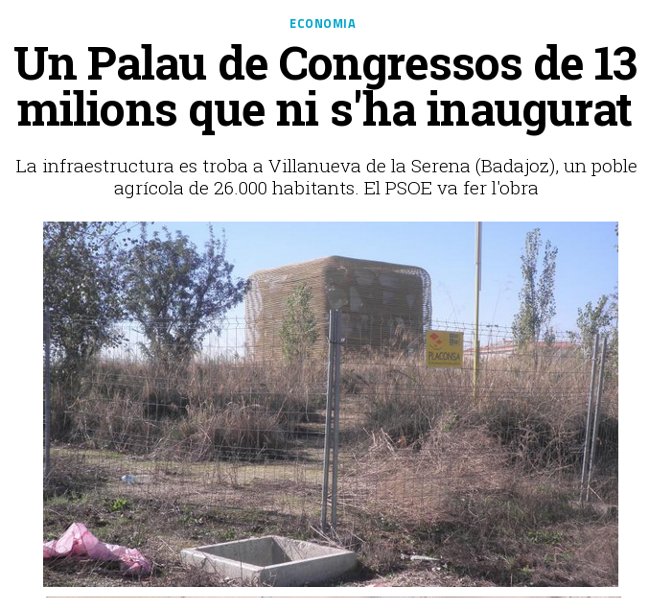
16) Palau Congressos fantasma Badajoz=13M€ (=Pressupost annual Badia Vallès)
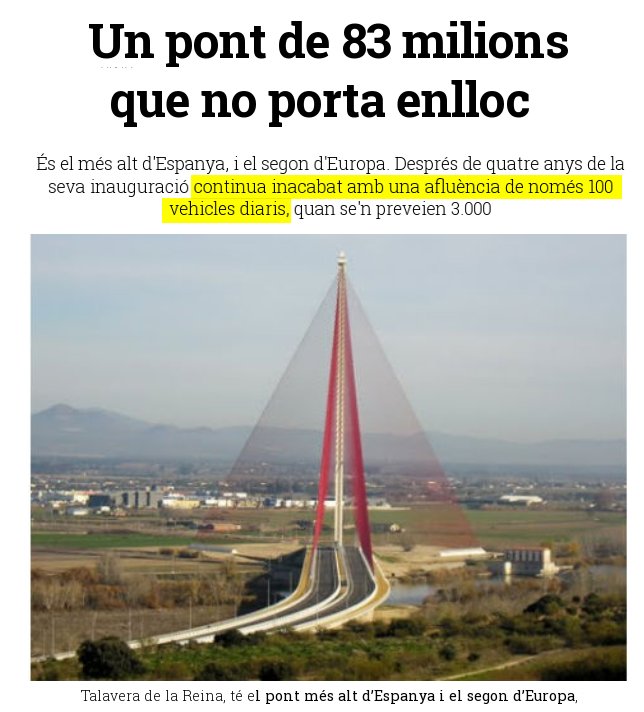
18) Pont Talavera (100 cotxes/dia)= 85 milions (=Pressupost annual de St.Boi)
https://twitter.com/denterd/status/693840564454817793
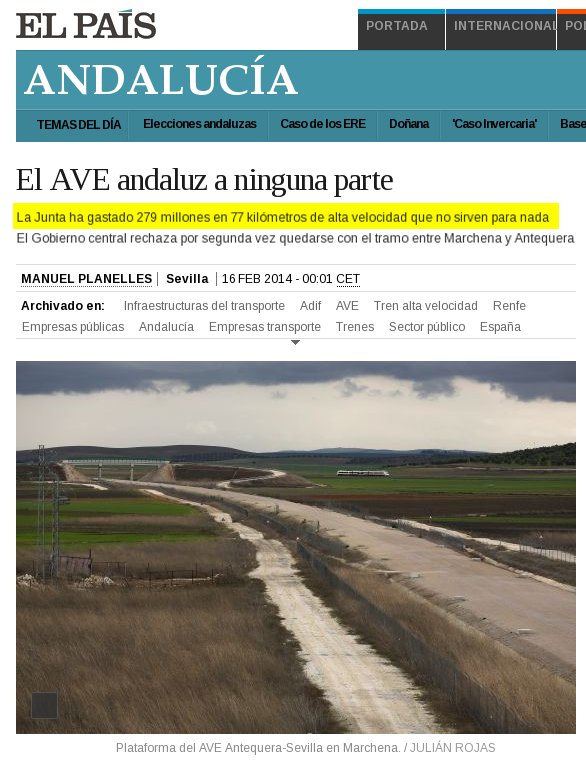
20) AVE abandonat Andalusia=279 M€ [Pressupost L'Hospitalet Llob.=230 M€/any]
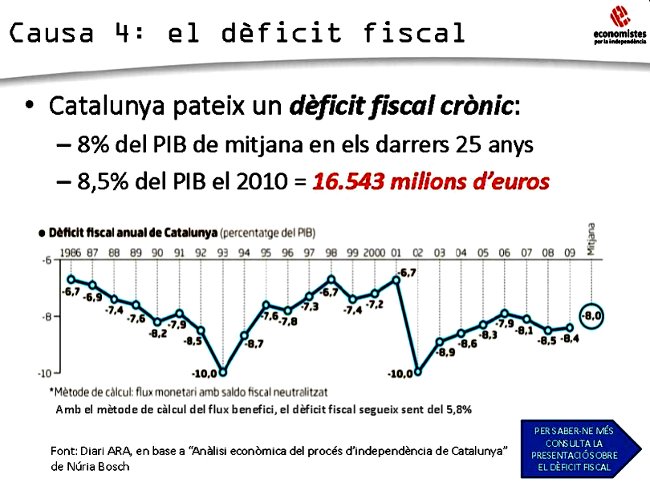
22) Dèficit fiscal mitjà de Catalunya (1986–2010) = 16.000 milions d'€/any
https://twitter.com/denterd/status/693856783463530497
1/28/2016
Fulls de ruta
https://ancvallesoccidental.files.wordpress.com/2015/09/programa_electoral_juntspels.pdf
http://cup.cat/sites/default/files/programa_de_la_cup_crida_constituent_27s.pdf
http://www.parlament.cat/document/activitat/153122.pdf
https://assemblea.cat/sites/default/files/ago2015/Full_de_Ruta_2015-2016_final.pdf
http://www.govern.cat/pres_gov/estilos/govern/pdf/Pla_de_Govern_2013-2016.pdf
http://www.vilaweb.cat/noticies/exclusiva-el-text-de-lacord-parlamentari-entre-junts-pel-si-i-la-cup/
Acords de la X Legislatura. 26-01-2016.
http://www.govern.cat/pres_gov/AppJava/govern/govern/consell-executiu/acords-govern/6141/govern-aprova-projecte-llei-canvi-climatic-destat-evidencia-compromis-catalunya-futur-planeta.html
8. Vídeos de la campanya de "Junts pel sí" i de la CUP:
http://vocxi.assemblea.cat/2015/09/16/videos-de-la-campanya-de-junts-pel-si-i-de-la-cup/
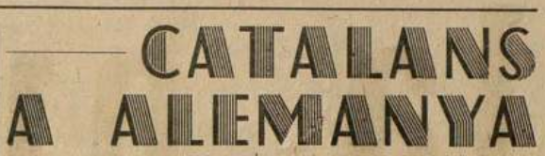
Catalans in Germany
All those who went into exile had to cope with an exodus that led them to both hunger and uncertainty (such as the one that Europe is contemplating, allowing and fueling again), and led many to their deaths or a new war, or to deportation to the Nazi extermination camps.
Some returned – too few, and condemned to silence and disbelief, deaf ears and neglect, shame and trauma.
Some fanned the flame and the resistance, the responsibility of freedom and memory, some words, some pictures.
An example of this is La Humanitat, the ERC’s weekly, published in Paris (according to memoriaesquerra.cat, the Fundació Josep Irla website) from 1944 to 1953 (“internal newsletter of Esquerra Republicana de Catalunya, member of Solidaritat Catalana”).
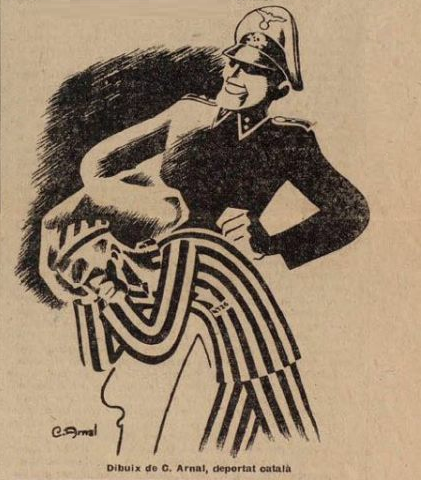
On page 2 of the September 23, 1945 issue, No. 24, a column, and a drawing by C. Arnal, relate the return of the deportees from Germany.

If only we all knew with what emotions of excitement, hope, frustration or sadness (and perhaps resentment) this publication was received at the time, printed on a single sheet and four pages, and dated 23rd September 1945!
To see all those names, mentioned one by one (and particularly Joaquim Amat Piniella, whose name has been revived in recent years thanks to the reedition of his book K. L. Reich). How these lists help to keep the struggles and the suffering alive in our minds!
In their honour and memory, we have decided to transcribe the full text, as a historical record, above and beyond one particular political party. These events are part of all of us.
"Catalans in Germany
La Humanitat, No. 24, September 23 1945, page 3, “Catalans in Germany”."Some days ago, we rejoiced over the return of deported Catalans from Germany. We did so with joy, moved by the fact that our words were addressed to the best of our fighters, who never lost their faith in Catalonia and in freedom. We did so also thinking that many members of our Party would return amongst us. And so it has been. Every day we receive news of those who have returned. Old acquaintances are renewed with delight. The same delight with which we often hear from people themselves or from their departmental organizations. They have all passed the ordeal that was reserved for deportees, they have all suffered and it will take time for them to recover. But they all tell us that they have not stopped believing in Catalonia and our ideals.
"Shortly after returning many, such as Marian Abella, who now chairs the Loire Departmental Committee, have resumed their activities among our ranks. A few days after his return Lluís Fages, a member in Catalonia of “El Foment de Reus”, wrote to us from Annecy to tell us that “I think I have to get in touch at once with the Party”. We have received similar news from our friend Antoni Bofarull Ferrer, secretary of the Baix Camp district party delegation in Tarragona, from Josep Pérez Fontcuberta, Lluís Jordà i Perich, Lluís Planes, Francesc Maya, J. Amat Piniella… and of course from the Eastern Pyrenees, where one of the most important delegations of our Party has informed us of the return of Francesc Vivé-Sánchez, Pere Lladó i Bret, Joan Huc i Vallespí, Jaume Huc i Peco, Jaume Garriga Coll, Pere Ferrero and Juli Ferrero.
"Unfortunately our joy cannot be complete - far from it. Many of our colleagues will never come back from Germany. There are some about whom we have no news at all. We have received specific news of others who died there. In Dachau, Ramon Serra (a party member from District V in Barcelona), the Vergès brothers from Reus, and our colleagues Coderch and Riera from Badalona, have all died. In Buchenwald, Josep Serra i Mistral and Antoni Canut i Morich of the ERC’s Ateneu Obrer in District V [Barcelona], and Antoni Gomis (party member from District IV) have all died. Lluís Ametllet i Roig, from the Girona Federation, and Francesc Abelló from Granollers have also died. We remember today these beloved companions as well as all the Catalans who have died in Germany, their only sin having been to love and serve their people and Freedom.
"From these lines we are duty-bound to point out the Catalan contribution to the crusade that has just ended with the defeat of international fascism and we once again underline the shocking mockery aimed at all those who have suffered and died in Germany: they cannot yet return to their homeland, which is still run by a system that has been defeated on battlefields across the world."
Catalans in Germany, drawing by Josep Cabrero i Arnal, Catalan deportee.
Translated by Miquel Strubell and proofread by Georgina Bryan-Brown.
1/26/2016
"The Catalan Plan". FT Video
The Catalan Plan: Six not-so-easy steps to independence
However, instead of being factual, it adds snide remarks which are in some cases highly questionable, and a frivolous reference to football, which, to my knowledge, does not form part of any "six-step" plan.
[traducció catalana més avall)
"1. Write a constitution.
- The government in Barcelona says it will soon start work on drafting a new Catalan Constitution. This will be put to a referendum.
- A tax authority
- A social security system
- A foreign minister
- A diplomatic service
- A new 'public bank' (sic) to serve as the interlocutor with the European Central Bank
- All of these new instuitutions need to be established within the coming 18 months
- The new government must ensure a smooth transition from Spain's legal system to that of a future Catalan republic [whose coat of arms, incidentally, will certainly not include a regal crown!].
- It is not clear how they can manage this.
- There is currently no support in the European Union for Catalan independence.
- The new Catalan leadership wants to change that - and encourage decision-makers abroad to put pressure on Madrid.
- Most Catalan leaders agree (sic) that independence is only achievable if Spain allows a binding referendum on secession - Madrid has repeatedly ruled this out.
- Even if that stance changes, the two sides would have to negotiate a division of assets and liabilities. This includes the thorny issue of how to split the country's public debt.
- The future status of F C Barcelona may seem trivial but it would be of huge importance to Catalans and Spaniards.
- Legally teams from an independent Catalan state could not play in La Liga.
- This would end one of the greatest clashes in world sport - Barça v Real Madrid - unless Catalonia could win an exemption from the rule."
My remarks.
The whole plan has been meticulously drafted, with hundreds of laws, decrees and other measures foreseen to ensure a smooth process. The White Paper on the National Transition of Catalonia includes all of the reports prepared by the Advisory Council on the National Transition and a summary of those made by the Secretary of the Council. A synthesis in English is available here.
The Catalan Constitution, once drafted, will be put to a referendum. Unless agreed by Madrid, civil servants could lose their jobs and politicians barred from public office, which is why it would have to be held under Catalan law (which Madrid would once again be quick to refer to the Constitutional court).
Article 1 on the Constitution will state, in effect, that Catalonia is an independent sovereign state.
As to "most Catalan leaders", the Unionists are totally against any referendum on independence being held (and even call for devolution to be quashed if necessary); some of the "Federalists" accept that Catalonia has (like Scotland or Quebec) the right of self-determination, so they agree to a referendum but would campaign against independence, and the pro-independence camp, who hold an outright majority of seats in the Catalan Parliament, are perfectly well aware of what the the road map lays down, should Madrid continue to stonewall Catalonia's democratic path to independence.
Finally, the reference to Barça is frivolous. "El clásico" (which is a neologism) could still be held were top teams from Spain, Andorra (which plays in the Spanish league), Portugal and Catalonia to share a super-league; this is not a new idea at all. Meanwhile, the Spanish authorities are busy fuelling the flames of a war against Barça on many fronts: taxation, fines for booing the Spanish national anthem and/or waving pro-indy flags, etc. No love's lost.
Traducció meva:
1. Escriure una constitució.
- El govern de Barcelona diu que aviat començarà a treballar en la redacció d'una nova Constitució català. Aquesta serà sotmesa a referèndum.
- Una autoritat fiscal
- Un sistema de seguretat social
- Un ministre de Relacions Exteriors
- Un servei diplomàtic
- Un nou 'banc públic' (sic) per servir com a interlocutor amb el Banc Central Europeu
- Totes aquestes noves institucions necessiten ser establert dins dels propers 18 mesos
- El nou govern ha de garantir una transició fluida del sistema legal d'Espanya a la d'una futura república català [l'escut d'armes, per cert, és segur que no inclou una corona reial!].
- No està clar com es pot gestionar això.
- Actualment no hi ha suport a la Unió Europea per la independència català.
- El nou lideratge català vol canviar això - i animar els prenedors de decisions a l'estranger a pressionar Madrid.
- La majoria dels líders catalans estan d'acord (sic) que la independència només es pot aconseguir si Espanya permet un referèndum vinculant sobre la secessió - Madrid s'ha pronunciat en contra en repetides ocasions.
- Fins i tot si aquesta postura canvia, les dues parts haurien de negociar una divisió d'actius i passius. Això inclou l'espinós tema de com dividir el deute públic del país.
- El futur estatut del FC Barcelona pot semblar trivial, però que seria de gran importància per als catalans i els espanyols.
- Legalment, els equips d'un estat català independent no podrien jugar a la Lliga.
- Això posaria fi a un dels grans enfrontaments al món de l'esport - Barça v Real Madrid - a no ser que Catalunya pogués aconseguir una excepció a la regla.
1/21/2016
CELRM
The application of the European Charter for Regional or Minority Languages by Spain
Press release - DC007(2016)
Regional and minority languages in Spain: Council of Europe issues new evaluation report
Strasbourg, 21.01.2016 - The Committee of Ministers of the Council of Europe today issued six recommendations to the Spanish authorities on the application of the European Charter for Regional or Minority Languages. It also published a report by a committee of experts assessing Spain´s compliance with the Charter....
Recommendation CM/RecChL(2016)1
on the application of the European Charter for Regional or Minority Languages by Spain
(Adopted by the Committee of Ministers on 20 January 2016 at the 1245th meeting of the Ministers’ Deputies) The Committee of Ministers,
In accordance with Article 16 of the European Charter for Regional or Minority Languages;
Having regard to the declarations made by Spain on 9 April 2001;
Having taken note of the evaluation made by the Committee of Experts on the Charter with respect to the application of the Charter by Spain;
Bearing in mind that this evaluation is based on information submitted by Spain in its national report, supplementary information provided by the Spanish authorities, information submitted by bodies and associations legally established in Spain and information obtained by the Committee of Experts during its on-the-spot visit;
Having taken note of the comments made by the Spanish authorities on the contents of the Committee of Experts' report;
Recommends that the Spanish authorities take account of all the observations and recommendations of the Committee of Experts and, as a matter of priority:
1. amend the legal framework with a view to making it clear that the criminal, civil and administrative judicial authorities in the Autonomous Communities can conduct the proceedings in co-official languages at the request of one party;
2. continue to implement legal and step up practical measures aimed at ensuring that an adequate proportion of the judicial staff posted in the Autonomous Communities concerned by the application of Article 9 of the Charter has a working knowledge of the relevant languages;
3. continue to implement legal and step up practical measures aimed at ensuring the adequate presence of the co-official languages in the State administration at the level of the Autonomous Communities;
4. continue to implement measures to ensure the presence of co-official languages in public services, especially in health care services;
5. continue to ensure that the offer of trilingual education does not adversely affect the protection and promotion of regional or minority languages;
6. consider extending the recognition of those regional or minority languages with a co-official status in six Autonomous Communities to other Autonomous Communities provided that there is a sufficient number of users of the regional or minority language involved.
European Charter for Regional or Minority Languages
...
ARAGON
Catalan in CATALONIA
p. 30:
p. 31:
Catalan in the BALEARIC ISLANDS
p.56:
Valencian in VALENCIA
-------------------------------
Recull de premsa, 21/1/2016.
El Consejo de Europa recomienda a España un mejor trato para el catalán: http://www.europapress.es/catalunya/noticia-consejo-europa-recomienda-espana-mejor-trato-catalan-20160121185842.html
El Consell d'Europa recomana a Espanya un millor tracte per al català: http://premsa.gencat.cat/pres_fsvp/AppJava/notapremsavw/290264/ca/consell-deuropa-recomana-espanya-millor-tracte-catala.do
El Consell d’Europa critica les dificultats per poder fer servir el català a la justícia. Exigeix a l'estat espanyol que 'modifiqui el marc jurídic' i 'garanteixi que una proporció adequada del personal judicial' té 'un coneixement pràctic' de la llengua. http://www.vilaweb.cat/noticies/el-consell-deuropa-critica-les-dificultats-per-poder-fer-servir-el-catala-a-la-justicia/
El Consell d'Europa estira les orelles a l'Estat pel català a la justícia. Reclama mesures que garanteixin que el personal judicial tingui suficient coneixement de la llengua. http://www.mon.cat/cat/notices/2016/01/el_consell_d_europa_estira_les_orelles_a_l_estat_pel_catala_a_la_justicia_157319.php
L’ús del català a la justícia, assignatura pendent. http://www.elnacional.cat/ca/consell-europa-destaca-impediments-utilitzar-catala-justicia/
El Consell d’Europa aconsella utilitzar més les llengües cooficials espanyoles. L’òrgan demana a Espanya que s’apliquin els idiomes minoritaris en l'espai sanitari i educatiu. http://cat.elpais.com/cat/2016/01/21/internacional/1453376905_625236.html
- El Consejo de Europa diferencia el valenciano del catalán entre las lenguas minoritarias. El informe del comité de expertos del organismo comunitario constan que el 82% de valencianos conoce su idioma. http://www.abc.es/espana/comunidad-valenciana/abci-consejo-europa-diferencia-valenciano-catalan-entre-lenguas-minoritarias-201601211321_noticia.html
CATALUNYA. El Consejo de Europa recomienda a España un mejor trato para el catalán. http://www.lavanguardia.com/vida/20160121/301576050153/catalunya-el-consejo-de-europa-recomienda-a-espana-un-mejor-trato-para-el-catalan.html
- El Consejo de Europa cree que el decreto del gallego entra en "contradicción" con la Carta Europea de Lenguas Regionales. El cuarto informe sobre el cumplimiento del texto, al que se sumó el Gobierno Estatal, detecta carencias de uso en justicia y sanidad. http://www.20minutos.es/noticia/2654258/0/consejo-europa-cree-que-decreto-gallego-entra-contradiccion-con-carta-europea-lenguas-regionales/#xtor=AD-15&xts=467263
El Consejo de Europa recomienda a España un mejor trato para el catalán. http://noticias.lainformacion.com/arte-cultura-y-espectaculos/lenguaje/el-consejo-de-europa-recomienda-a-espana-un-mejor-trato-para-el-catalan_hMwBpfhQQIaDjpV7e00Wu2/
El Consejo de Europa destaca el 'avance' del euskera en la CAV. Valora la política lingüística del Gobierno Vasco, mientras que cree 'decepcionante' el presupuesto del gobierno navarro al fomento del euskera. http://www.eitb.eus/es/noticias/sociedad/detalle/3778060/el-consejo-europa-destaca-avance-euskera-cav/
- El Consejo de Europa recomienda a España un mayor uso de las lenguas cooficiales. http://www.euractiv.es/noticias/El_Consejo_de_Europa_recomienda_a_Espana_un_mayor_uso_de_las_lenguas_cooficiales-11213.html